Showing posts with label The Beatles. Show all posts

2024-12-04

THE BEATLES - BEATLES FOR SALE @ 60

Released on December 4th, 1964, the fourth LP by The Beatles, Beatles for Sale, turns 60 years old today. The album was not officially released in North America until The Beatles catalogue was standardized internationally for CD in 1987. Instead the US and Canada got Beatles '65, released concurrently with Beatles for Sale, and containing 8 of the latter album's tracks, with the remainder of the album's 11 tracks coming from a track excluded from the US release of Help, plus a UK non-LP single.

The overall mood of Beatles for Sale is markedly darker and more sombre than their previous albums, with the band shying away from the trivial love songs that were predominant on their earlier works. Part of the reason for this has to do with their trip to the US and their first meeting with Bob Dylan, who famously lauded their musical abilities while chiding them for their superficial lyrics. He encouraged them to use their influence to explore more meaningful and introspective subjects. John Lennon took his comments particularly to heart. But don't think the influence was only one way. It was shortly after Dylan's encounter with The Beatles that he made the decision to go "electric" and front a rock band, recognizing that the format The Beatles had popularized was where the future of pop music was heading. The group's trip to the US also influenced the album in its use of country and folk influenced musical styles, as the band were exposed to US country music radio and sought to incorporate that style into their sound.

The album also brought a new palette of sounds into the group, particularly in the use of more exotic percussion instruments, like tympani and African hand drums. By this point, the studio was also undergoing a transition as far as how the band perceived its use. Rather than being merely a place to document their live sound, they began to understand the artificial potential of the tools at their disposal. It was with this album that they truly began to take an interest in the process of recording and the techniques that could be used to alter their sound. With this, they began to augment their arrangements, stripping back layers and complexity and giving depth and space to their sound with the use of reverberation devices.

The other factor that influenced the end result for the album was the breakneck schedule that the group had been held to because of the unprecedented explosion of popularity that had happened in the preceding two years. They were worked to the bone by their label, and because of their naivety, didn't understand that they had any say in the process. The schedules of recording, touring and making personal appearances on radio and TV meant that the group's principal songwriting team of Lennon and McCartney were left with very little time to come up with new tunes for their latest record. With Beatles for Sale, they only had eight new original songs, plus a couple used for a non-LP single, so the remainder of the album's 14 tracks consisted of cover versions of songs they'd been playing in their live set. This was a bit of a step backwards given that the previous LP had been all originals.

Despite the lack of time allowed to work on the album, the band still managed to come up with something that demonstrated definitive progress, both as song writers and performers. There was a palpable evolution in the maturity of the music, its emotional scope and the group's willingness to push their own boundaries. They were reaching a point where they would soon develop a complete command of their abilities and the tools they used to realize their vision. Critics of the times were picking up on this as well, and the album received overall very positive reviews, and of course, it was able to continue the domination of the charts The Beatles had secured with their first three albums.


2024-01-13

THE BEATLES - YELLOW SUBMARINE OST @ 55


Released on January 13th, 1969, and celebrating its 55th anniversary today, is the Beatles' original soundtrack for their animated feature film, Yellow Submarine, which premiered in London in July of 1968. It was the tenth studio album by the band, though it does not, in fact, offer a full LP's worth of original Beatles music. The B-side of the LP is entirely taken up with incidental music created for the film by George Martin, the Beatles' producer. It was essentially a contractual obligation release due to the band having singed a deal for the film stipulating that they would create four original songs for the soundtrack and include Martin's score on the release.

The first side of the record features six songs from The Beatles, two of which had been released previously. These included the title track and All You Need Is Love. Of the 4 songs unique to the album, Only A Northern Song, a gripe-song about George's publishing contract, and It's All Too Much, an ode to LSD, were both Harrison compositions, with the former being a rejected leftover from Sgt. Pepper. The latter was originally over 8 minutes in length, but was edited down for the final version. All Together Now is a McCartney composition that was inspired by British music hall singalongs and was considered by its author to be a "throwaway", while Hey Bulldog was contributed by John Lennon, who described it as, "a good-sounding record that means nothing."

The B-side of the LP consists of re-recordings of the incidental music by George Martin and many consider this material to have severely compromised the overall quality of the album. Even John Lennon dismissed the music as "...all this terrible shit" and blamed Brian Epstein, the Beatles' manager, for allowing Martin to participate in the project. Plans were even made to release an EP containing only the 6 Beatles songs, but this release, even though it got as far as mixing mono versions of the songs and mastering, was ultimately abandoned. George Martin certainly wasn't going to agree to have his contribution dropped as this was going to be a major payday for him, given the massive publishing and royalties he'd be getting by piggybacking on The Beatles popularity. This was only changed when a 30th anniversary edition of the soundtrack was released in 1999, which omitted Martin's work and added 9 Beatles songs that appeared throughout the movie, but were not included on the original soundtrack due to being previously released songs.

Though the new material for the soundtrack was recorded and completed before the group started work on their eponymous "White" album, release of Yellow Submarine was delayed until after the White album was released in order to avoid having the impact of that album undermined by the soundtrack. Upon its release, it did well in terms of sales, but the critical response to it was mostly ambivalent and many felt that it simply didn't offer the kind of value that was a consistent trait of previous releases. The Beatles themselves were simply disinterested in the project as a whole and agreed to an animated film simply because it meant the most minimal commitment from them.

Personally, this album was my introduction to the group, at least in a way that left an impression on my very young mind. I couldn't have been older than 5 or six when a babysitter brought the LP over and played it for my brother and I. I was immediately enthralled by it, and it became my touchstone for my first impressions of the band. As such, it has a certain sentimental value, even though it's likely their least significant record.
 

2023-11-11

JOHN & YOKO - UNFINISHED MUSIC NO. 1. TWO VIRGINS @ 55


Marking its 55th anniversary today is the debut album from John Lennon & Yoko Ono, Unfinished Music No. 1. Two Virgins, which was released on November 11th, 1968. A record like this can only exist if one of the people making it is a Beatle who doesn't have to worry about whether anyone buys it and has access to a record label owned by his band. That's not to say this shouldn't exist. The fact it does is a wonderful thing because it's such an incredibly bizarre, self-indulgent mess of chaotic fun. It's the sound of two people rediscovering their inner children and sparking a whirlwind romance in the process.

John Lennon first encountered Yoko Ono in November of 1966 when he was invited to attend one of her exhibitions in London. She was an obscure Japanese underground artist and John found her work possessed a decidedly positive world view, something he found exceedingly appealing given the general pessimism of most alternative artists. After the exhibit, he kept in contact with her and, two years later, while wife Cynthia Lennon was away from their home on vacation, he invited Yoko over to spend the evening in order to show her his home studio and play her some of his sound experiments. These were totally avant-garde improvisations he knew the Beatles would NEVER have any interest in, but Yoko was fascinated by them and the two began to work on making some noises together that night. The next morning, Cynthia came home unexpectedly and discovered the pair dressed in matching white robes and sitting cross legged on the floor, staring into each other's eyes.

What they created for this album was essentially a lot of random incidental noises and vocalizations layered over-top of a series of tape loops and snippets of pre-recoded bits and pieces. They had no arrangements in mind or plans for any of it. Lennon described Unfinished Music as "...saying whatever you want it to say. It is just us expressing ourselves like a child does, you know, however he feels like then. What we're saying is make your own music. This is Unfinished Music."

After it was recorded, Lennon had to spend the next six months trying to persuade the rest of the Beatles to release it on Apple Records. Their hesitance was somewhat justified, given it was generally reviled by both fans of the band and music critics. Actress Sissy Spacek, using the pseudonym Rainbo, even recorded the song "John, You Went Too Far This Time" in response to the album's cover! Despite its bizarre nature, John & Yoko still ended up working with George Harrison to construct the similarly inspired sound collage, Revolution 9, for the "White" album.

The album ended up becoming the first of a trilogy created by the couple, all working within the same strange cacophony of experimentation. Not exactly the kind of "music" most Beatles fans were looking for. As a result, these albums have become rather obscure artifacts within the canon of both The Beatles and John Lennon. The cover for the album featured the couple stark naked in their birthday suits. The distributors for the record were none too pleased with such an image and the LP ended up shipping tucked inside a brown paper bag for retail sales, which were unsurprisingly minimal.

2023-03-22

THE BEATLES - PLEASE PLEASE ME @ 60


Celebrating its diamond jubilee today, at a whopping 60 years old, is the debut LP from The Beatles, Please Please Me, which was originally released in the UK on March 22nd, 1963. It was an LP which launched the era of the so-called “self contained” band, artists who were both songwriters and performers, and revived the spirit of rock ’n’ roll, which had waned since Elvis was drafted into the army.

The Beatles had been working together in various iterations since they began as a Liverpool skiffle band in the late 1950s. After several years of paying their dues in clubs in the UK and Germany, they finally caught the attention of EMI, who consigned them to their Parlophone imprint, a division run by producer George Martin. Initially, the band had focused mostly on cover songs, but Lennon & McCartney had gradually been building up a cache of original compositions, though Martin originally felt that they were lacking as songwriters. At the time the group signed their deal, Pete Best was still on the drums, but after an initial trial recording session, which failed to produce any usable results (even with a session drummer subbed in), the group gave Pete his marching papers and brought in Ringo Star to finalize their lineup.

After their misfired initial studio session, Martin’s first idea for the band was to make their debut LP a live album. He went down to the Cavern Club to check them out, but binned the live album concept after hearing the sound quality in the club and deeming it unsuitable for recording. Switching to the idea of a regular studio album, he got the band back in to record and they captured their first single, Please Please Me. Though Martin was still doubtful of their songwriting abilities, he agreed to release the song and was surprised by the success they achieved, with it hitting #17 on the charts. After that point, he put his doubts aside and embraced the duo as competent pop music composers, allowing them to contribute half of the material for the album.

At the time The Beatles were emerging in the studio, the idea of a band writing their own songs was not the norm. Song writers and performers were two separate entities and did not generally cross paths. The Beatles also did not use session musicians for this LP, which was another exception to the usual process for bands. Throughout the 1950s & 1960s, session musicians were behind the vast majority of music created for the pop charts. However, with Ringo now on drums, they had the capacity to nail performances in the studio without the necessity of bringing in more adept musicians. They’d been hammering out their music in the clubs for years, so delivering flawless performances in the studio was well within their wheelhouse.

When it came time to record the album, Martin asked the band what they could whip through quickly and they said their stage act was the easiest for them to get down without much hassle. The group were recorded primarily live in the studio with limited overdubs. Back then, studios didn’t have the luxury of massive amounts of tracks. Two tracks was generally the standard of the day, so layering was extremely limited. In this case, most of the instruments were on one track with the vocals on another. The sessions took place over the course of a mere few days with the band doing a quick run-through of each song to get a level and then banging out the finished version, often in a single take. Given the legacy and importance of what came out of those sessions, it might just be the most efficient 585 minutes of studio time ever booked.

During the sessions, John Lennon was suffering from a bad head cold and spent the whole time downing throat lozenges to battle the congestion. This caused Martin to have to be strategic when recording John’s vocals, leaving the most demanding song, Twist and Shout, to the very end of the sessions. Martin remarked: "I don't know how they do it. We've been recording all day but the longer we go on the better they get.” Lennon said of his one-take performance: “The last song nearly killed me. My voice wasn't the same for a long time after; every time I swallowed, it was like sandpaper."

The 14 song version of Please Please Me was released in the UK only in mono initially, which was standard practice for the times. The stereo mix was issued on April 26th. Outside the UK, The Beatles debuted with variations of the UK version, re-titled and with different cover art and altered track listings. This was also a common occurrence, particularly within the first half of the decade. This created a rather confusing catalogue for fans to collect for many years as variations of their albums could be found in different markets. It wasn’t until decades later when the albums were remastered for CD that their catalogue was standardized to the UK editions, internationally.

Please Please Me hit the top of the UK album charts by May and stayed there for a stunning 30 weeks. It was the beginning of Beatlemania in earnest. Only their sophomore LP, With The Beatles, pushed it out of the top spot. This chart success was another revolutionary aspect to The Beatles’ career as the album charts were typically dominated by soundtracks and easy listening pop vocal releases. The Beatles blasted open the charts to be dominated by rock ’n’ roll artists, with acts like The Rolling Stones, The Who and The Kinks soon to take up residence in this new commercial terrain.

Cracking the US market would prove to be somewhat more difficult. Initial single releases in the US didn’t strike up a lot of interest at first and Capitol Records passed on releasing their debut. Ultimately Vee-Jay Records took up the album and trimmed off a couple of tracks to fit the US track count standard, re-titling the album to “Introducing the Beatles”. This version was not issued until January of 1964. By that time, the group had managed to score a US hit single with I Want to Hold Your Hand in December of 1963. This success lead Capital Records to finally be convinced of the commercial viability of the band, buying back the rights to their catalogue and releasing Meet the Beatles, a further modified version of their debut, shortly after the Vee-Jay album’s release. Following the February 9th, 1964, debut US TV appearance on The Ed Sullivan Show, the spark was ignited for the group to take over the US market and kick off what would become known as “the British Invasion” period of rock music.

Since its release, Please Please Me has become codified as a cornerstone for a new approach to pop music where the artist became responsible for nearly all of what became documented on their albums. It reinvigorated the rock ’n’ roll genre as a commercially dominant musical form and set millions of teenagers around the globe on the path of starting their own bands. You can’t talk to any pop music artist who came from the 1960s and find one who wasn’t inspired by seeing The Beatles on TV for the first time. They caused a cultural epiphany which triggered a paradigm shift in the way music was perceived and created. The very concept of a rock band still resides in the shadow of The Beatles and what they put to vinyl on that first album.

2022-11-27

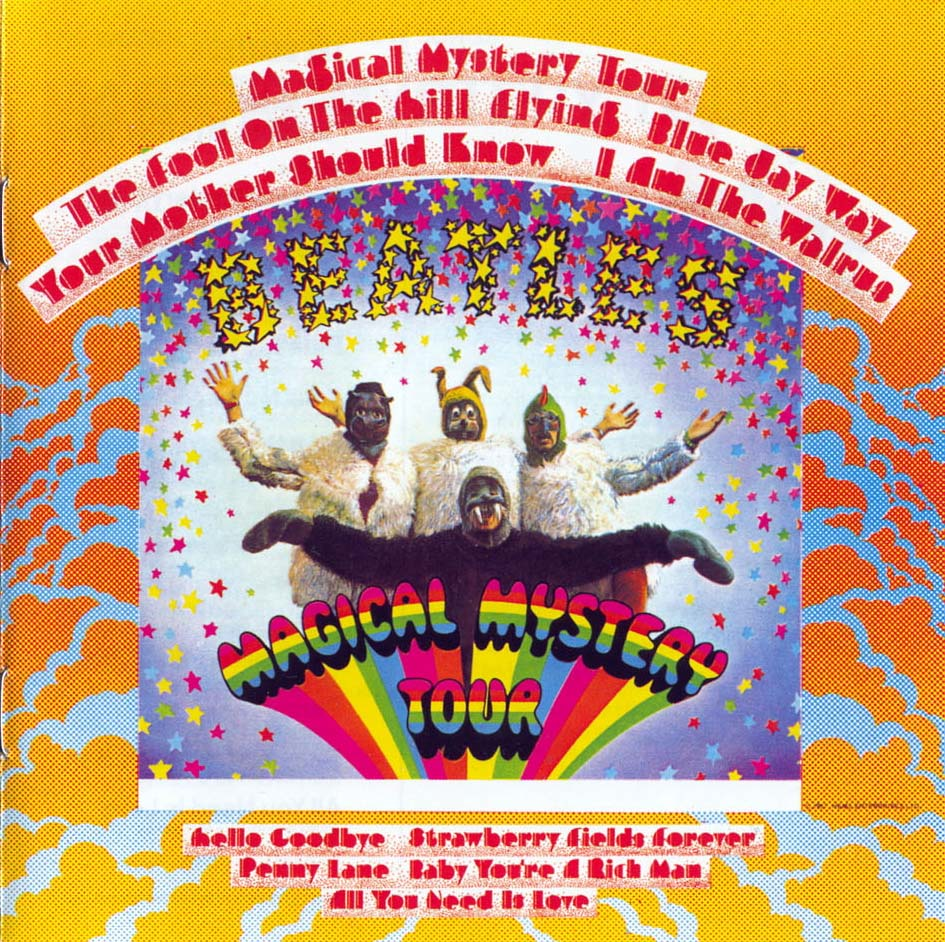
THE BEATLES - MAGICAL MYSTERY TOUR @ 55


On November 27th, 1967, 55 years ago today, The Beatles released the Magical Mystery Tour LP in the US. The double 7’ EP variation followed in the UK on December 8th. Following on from their paradigm shifting Sgt. Pepper's Lonely Hearts Club Band, it continued their exploration of psychedelic experimentation, though for some, it may have been a bit too self-indulgent.

After completing Sgt. Pepper, Paul McCartney conceived of the idea of creating a film for TV along with its accompanying soundtrack. The concept was inspired by the activities of author Ken Kesey’s “Merry Pranksters”, who had become infamous among the "hippie" generation for their roving busload of freaks on LSD, touring the country and turning people on with their “Acid Test” parties. Paul had thought of doing something similar, though giving it a Liverpudlian twist by incorporating John’s recollections of seaside holidays from his youth. It was to be an unscripted, stream of consciousness experience which would be aimed at elucidating the psychedelic experience for the program’s viewers. The band were at the peak of their dalliances with the substance at the time and were also deeply involved with Transcendental Meditation as taught by Maharishi Mahesh Yogi. The basic framework for the narrative was to have “ordinary” people having “magical” experiences.

Work on the project began in late April, but was soon sidetracked as the group became distracted by their meditation studies, launching their Apple Records imprint and working on songs for the pending Yellow Submarine animated film project. Things only refocused on on Mystery Tour after the sudden unexpected death of the band’s manager, Brian Epstein, who had given his approval to the project before his passing. Again, it was McCartney who drove the project forward, despite the resistance of the other band members. Paul’s ambitions toward film production and changing the direction of the band were fired up by the project and he soon became an unstoppable force.

Recording of the music and production of the film occurred in tandem and the entire endeavor is reported to have been rather unfocused and undisciplined. Without Epstein’s guidance, the group were largely left to their own devices to motivate themselves and the overall milieu resulting from the frequent “tripping” going on within the group encouraged a state of barely organized chaos as they sought to take advantage of happenstance and spontaneous improvisation. Work on the soundtrack was completed on November 8th and the finished film was aired in the UK on December 26th.

The response to the film was decidedly weak from both fans and critics. The film was intended to be a colorful adventure, but because BBC1 weren’t able to broadcast in color, it was aired in black & white and looked terrible. It was rebroadcast again in color a few months later, but it didn’t make much difference because so few people had color TVs. The lack of any clear story certainly didn’t help. It was the group’s first major critical failure and the poor reviews dissuaded any US networks from airing the special. Fortunately, the music fared significantly better.

In the US, it was released as an LP with the A-side containing all the soundtrack music while the B-side was filled out by all the non-LP singles which had been produced and released during the time of production. This included songs like Strawberry Fields, Penny Lane and All You Need Is Love. The UK release only included the music used in the soundtrack, so there were only 6 songs, not enough for an LP. The innovation here was to issue it as a double 7” EP, which was the first time such a format was used in the UK. Both versions included a booklet with photos and a comic strip. However, when the Beatles LP catalogue was standardized internationally, the US LP version was taken as the standard over the UK edition, the only time this was done for a Beatles LP.

Despite all the muddle from a confused production process, the group were still able to deliver some of their most important music. Though it may have been a misadventure spurred on by artists who were a bit lost in their grief, coupled with ambitions distorted by narcotic indulgences, The music created during this period is nevertheless representative of the band’s genius during one of their most creative and inventive periods.

2020-05-07

INFLUENTIAL ALBUM - THE BEATLES, YELLOW SUBMARINE


Music was a big part of my childhood. My mom even played music extra loud while I was in-utero because she wanted me to love music, and this was in 1963, long before hipster moms glomed onto the idea of trying to influence their babies while they were still chillin' in the womb. Once I was outta there, it was mostly stuff like Elvis & Johnny Cash records for my mom, while my dad had a Latin easy listening lean, stuff like Herb Alpert & Mexican Joe. They were still in their early 20s, so while their tastes were rooted in the 1950s, they'd still pick up the odd contemporary single, things like The Monkees' I'm a Believe & Last Train to Clarksville, but it was mostly country music stuff from them beyond that.

The real eye/ear opener for me as a kid was the day the babysitter brought over her newly purchased copy of The Beatles Yellow Submarine. It being released in 1969, I couldn't have been more than 5, going on 6. I can remember it so clearly, being in the living room, sitting with her on the floor next to the big old console stereo and her showing me this record. The cover of it was marvelous, so colorful and strange! Coming into my sense of self-consciousness in the late 1960s was a weird time because psychedelia was in full swing and it had an immediate appeal for a kid like me with its bright colors and fantastical imagery. It most definitely became a foundation memory for me in terms of guiding my quests for the unusual.

When she put the record on, I recall being transfixed by the music. It was so different from anything I'd really heard before and so instantly memorable. The hooks in the songs sunk into you and never let go. You heard this stuff once and were humming it forever afterwards.

I had no idea of what went into making this music back then nor how sophisticated it was in terms of its production, arrangements and execution. All I knew was that I wanted to find more music like this. It would be several years before my record collecting obsession would fully kick into gear in 1977, but this album was the one that got me to perceive the medium as something special and collectible, objects worth coveting. At the time, however, all I knew was that I also wanted to live in a Yellow Submarine.

2019-05-03

IS MUSIC A DEAD ART?

 
Let's begin by defining what I mean by the term "dead art". In essence I'm referring to an art form which is no longer capable of significant technical or conceptual progress and no longer has the capacity to instigate change on a cultural level. An example of what I would consider a "dead" art would be painting, at least in the sense of something hanging in a traditional gallery somewhere. Perhaps it can be said that certain forms of graffiti still manage to trigger controversy and commentary. A practitioner such as Banksy is an example of someone able to inspire discussion and make political statements through their art. Street art aside, I don't see anything happening in that particular branch of the visual arts world which is likely to cause much of a stir or inspire anything to happen beyond its canvases. At most, paintings now simply decorate a room.  Perhaps the work of Warhol may have been the last time paintings had any particular impact on the larger cultural landscape other than, for example, soliciting outrage at the expense of a "stripe" on a canvas.  

I"m old enough to have experienced at least three major cultural shifts within my lifetime which I can say were, more or less, directly linked to a particular musical movement. In my childhood, the late 1960s, there was the psychedelic explosion. Though the primary impetus for that change was a narcotic, specifically LSD, its route through western culture was entirely paved by music. It was rock & roll bands who were sounding the clarion call and it was songs about altered perception which seduced the youth of the era into "tuning in, turning on & dropping out". Without bands like The Beatles, Pink Floyd, The Grateful Dead and others, the word would never have been able to reach as many people as it did.

In my adolescence during the late 1970s, it was the three headed Cerberus of "punk", "new wave" & "industrial" music which broke kids out of their doldrums and got them thinking, dressing and behaving in new ways.  It was a rebellion against the status quo and conformity which had set in after the comedown of the hippies left their parents dropping the love beads and packing up the station-wagons that drove them out into the bland mediocrity of the suburban landscape.  

In the spring of my adulthood, the final revolution came about through the entwined twins of hip-hop/rap music and electronic rave culture spearheaded by acid house and techno music in the late 1980s and early 1990s.  Starting in the early 1980s, before the cancerous spread of gentrification and rising property costs, the warehouse was the scene where exploration and experimentation could happen.  You could get a cheap space for a couple hundred or less per month and pay for it by selling unlicensed booze at weekend parties a few times a month.  Designer drugs, mobile sound systems, isolated locations and trance inducing music sent youth back into tribal states of ecstasy and transcendence. Though a callback to the spirit of the 1960s in the case of the rave scene, the hip-hop crowd veered into the raw street rage of gangster culture.  It shone a glaring light on issues such as police brutality, racism, class discrimination, poverty and injustice.  In either case, it was again a time when adults were afraid of what their kids were getting into.     

Outside of my own personal experience, music as a driver of cultural influence practically only goes back to roughly the beginning of the 20th century.  Before that, you only had folk and traditional music available to the general public and those forms tended to reinforce and sustain existing norms rather than drive changes to them.  On the other extreme, with "classical" music, you might have some influence within the upper crust of society, but very little beyond it.  Religious music, like folk music, tended to sustain tradition rather than spur innovation.  It's not until the advent of recording technology that the idea of true "popular" music comes into play as the populace gain access to mass produced music mediums and playback systems accompanied by radio broadcasts.  Also, the push to innovate, driven by the industrial revolution and its technological advances, begins to trigger changes in music technology and techniques, and consequently, culture.  

The first popular music form to trigger controversy in the general public comes with the birth of jazz.  Elitist art movements like the Futurists and Dadaists may have inspired extreme experimentation with sound, but it was not something that noticeably effected the masses and remained a novelty of the galleries and wealthy art circles.  Jazz, on the other hand, came up from the black communities and was entirely driven by the "grass" roots (pun intended).  This was music that was accessible by the average person and was one of the first times music was seen as being a degenerate influence on youth.  It impacting dress styles, dance, sexuality and social issues.  The ideas of losing one's inhibitions and free expression were built into the very DNA of jazz and these have been a recurring theme throughout every musical epiphany and paradigm shift which has occurred since. 

In the 1950s, there was the birth of that great BEAST, rock and roll.  Here was a hybrid between white western swing music and black boogie-woogie blues with a backbone borrowed directly from native American aboriginal music, thanks to the Creole merger of Louisiana post-slavery blacks and "Indian" blood.  This combination proved combustible beyond anyone's imagination and sent the entire north American continent into a spin, one which would ultimately bust out onto the world stage and influence youth around the globe, from Europe to Africa to Asia.  Rock & roll was the proverbial "Pandora's Box" and, once that lid was open, all manner of wicked spirits flew out.

When you line all of these movements up, you have a 20th century popular culture which was continuously and repeatedly impacted and influenced by musical movements.  In each case, these changes were derided  and dismissed by conservative, "adult" overseers as subversive, perverted and destructive to the moral fiber of the youth and the nation.  There was a sense of threat and menace perceived by the "powers that be" which drove them to do whatever they could to stifle and inhibit the spread of these movements and, without exception, those efforts not only failed, but likely resulted in even more popularity for whatever it was they were trying to stop.  

Throughout the 20th century, there was also a marked and obvious change in the styles, techniques and technologies used to create music.  Something that was popular in the 1950s sounds completely different from something popular in the 1960s.  Take any decade or even the span of a few years and a major evolution could take place.  Anyone with even a basic familiarity with 20th century popular music can listen to virtually any tune and peg, fairly accurately, when it was made.  The style of playing, the recording techniques, the way it was mixed - all these clues tell the tale of when that recording was made and often where and by whom.  

Flash forward to the 21st century and things seem to have reached a kind of impasse in terms of forward momentum and cultural significance.  Since the 1990s, I can't think of any significant cultural shift which has been driven by music.  Technological changes such as computers, internet, smart phones and wireless networks have had far greater impact on our lives than any art form.  The machinery of the popular media has become so efficient at assimilating creative product, that nothing seems to be able to upset the cultural "apple cart" these days. 

Stylistically and technically, music has essentially plateaued.  We're two decades into the new millennium and I can put on a recording from 1995 and put it next to something form 2015 and only the most sophisticated, knowledgeable listener would be able to distinguish their origins.  For several decades, beginning with the unfortunately termed "Krautrock" of the early 1970s, electronic music was at the forefront of innovation and experimentation.  From the "motorik" rhythms of Kraftwerk and Neu to the ambience of Cluster & Eno to the pulsing sequencers of Tangerine Dream, the German music scene blasted the lid off and broke away from the rigidity of American blues archetypes.  After this, experimentation flew off in all directions through post punk, industrial, techno and a plethora of sub-genres, constantly evolving throughout the 1980s and 1990s.  But it all kind of stalled out after that.  Beyond the shifting of tempos between drum & bass and dubstep, the genres seemed to stabilize and consolidate and, with only minor variations since, they've remained relatively constant and consistent.

Culturally, no one gets upset about what a music personality does these days except for the most trivial and sensational issues of bizarre conduct or eccentric individual behavior.  Today, when Kanye West stirs up the media, it's because he's boasting about himself or proposing some laughable indulgence.  The days when politicians would discuss a Johnny Rotten in parliament or a president would put a John Lennon on a subversives list are long gone.  Rap music is more concerned with money and status these days than social justice, for the most part.  At least that's the kind of content that ends up in greatest rotation and gains the highest profile.  And those who do seek to make critical statements are commodified to the point where they are no threat to anyone in the establishment.  They are all neatly and safely packaged and peddled to the appropriate pauper for consumption.  

It seems that most art forms go through a similar arc in terms of their evolution.  They begin in primitivism, as an expression of the masses, evolve into more refined, classical complexity in the hands of the elite and then expand into more experimental realms such as abstractionism, surrealism, modernism and impressionism before ultimately culminating in various forms of post-modernism, which creates hybrids between all of these various branches.  Once you get to the stage of post-modernism, works tend to become self-referential and the commentary becomes an internal dialogue.  That point where the art is able to interact with and influence people and culture on a large scale begins to diminish and disappear.  The medium then tends to fade into the background as mere decoration or embellishment. 

This is where we seem to have arrived at in terms of the art of music.  It now seems to be no more than a structural component rather than something that stands on its own.  People spend less and less time sitting down and listening to music anymore or taking any kind of message or influence from it.  It's mostly just something that's happening in the background. It's no more than a form of "wallpaper" or distraction and not a primary focus of attention.  It's not that that there's anything intrinsically wrong with that, but for someone who grew up with music that made revolutions, I can't help but express a sort of lamentation for the loss of that capability.  Parents don't get scared by their kids records anymore.  Sure, they may not like them or find them objectionable for aesthetic reasons, but they rarely worry that their kids might join some subversive movement because of whatever is hiding in those grooves.  Even that terminology is irrelevant now as most people don't use physical media anymore except as a fetishized object for some hipster sense of nostalgia.

It's not that no one is doing "good" music.  As subjective as that may sound, there are very real standards which can provide a sense of value and quality for any piece of music.  Talented artists are creating quality recordings and performances.  It's just that the sense of a sharp, cutting edge has gone.  I can't look out there anywhere and find anything that gives me that quiver in my gut feeling that something "dangerous" is going on. 

If there is any art form remaining which can get the hackles up of the establishment, I'm not sure I know what it is or where to find it.  I suppose the most dangerous, subversive medium on the planet these days is the dark web, but this is more a place of criminals and perverts than revolutionaries.  If they do exist there, they're doing a pretty shitty job of pulling the pins on this nightmare we're all trapped in.  At a time when we are staring down the barrel of extinction level global catastrophes, we need that revolutionary voice now more than ever.  We need something that can wake us out of this zombie like trance that keeps us lumbering ever closer to the precipice awaiting our final stumble.  If it's out there, I have yet to see it.