2021-11-13

JAPAN - TIN DRUM @ 40


November 13th marks the 40th anniversary of the release of Japan’s fifth and final studio album, Tin Drum, which was issued on this date in 1981. It would become the band’s most commercially and critically successful album, decisively pulling them out of the shadows of any previous comparisons to bands like Roxy Music and into a sound that was entirely their own.

Only a few years earlier, the band had emerged as a bunch of out-of-step glam-rock, lipstick and dyed-hair pretty boys. This was right in the middle of the punk explosion! How they ended up in the lofty artistic position they found themselves in with this last album is something of a marvel of improbability. Where their first two albums, when they garnered any attention at all, tended to attract mostly scorn and ridicule, Quiet Life and Gentlemen Take Polaroids were committed to the Herculean task of rehabilitating their credibility and the pieces came into their sharpest arrangement on Tin Drum.

Given the Eastern inclination of their name, which they bore as a burden in some ways, the idea of diving headlong into Asian influences may have been inevitable, but I don’t think anyone was prepared for what they’d do with them. As musicians, they’d been grossly underestimated and Tin Drum put to bed any lingering doubts about their capabilities. The album is complex, intricate and dazzling in its array of textures and tones. As far as mastering the tools of the modern day, they found ways to put synthesizers and sequencers to work for them in tandem with more tradition percussion instruments in ways that became completely idiosyncratic to them. Nothing else on the airwaves came close to this sound and it was entirely their own creation.

By the time recording began on the album, guitarist Rob Dean had departed thanks to the reduced reliance on guitar as a central component of their sound. With the emphasis on keyboards, David Sylvian was more than able to handling what little guitar duties were called for. This allowed the rhythm section of Steve Jansen on drums and Mick Karn on fretless bass to push forward even more and create a framework of rich complexity, though never so indulgent as to work against the integrity of the music. Nothing sounds cluttered or overwrought on the album. There’s a lot going on at any given point, save for the minimal hit single, Ghosts, but it’s all meticulously balanced. Richard Barbieri shines on the keyboards as he augments Karn and Jansen with an expansive sound palette that seem to come from an entirely exclusive reservoir. And David Sylvian, of course, brings it all together with his inventive, evocative lyrics and sultry croon.

It seemed like they were just hitting their stride with this album, so it’s all the more confounding that it would be their swan song. They’d put out a live album in 1983 recorded on the tour that supported Tin Drum, but that was it. A brief reunion would happen ten years after Tin Drum for the Rain Tree Crow project, though that didn’t garner significant attention, despite being a very satisfying album. Perhaps it was best for their legacy for them to have gone out on such a stunning high note. It ultimately worked to reinforce their legend and highlight the trajectory they traveled, from dismissed objects of scorn to the peak of critical respectability, all in less than a half decade. I came on board the Japan wagon with Quiet Life in 1979, so that album, Gentlemen Take Polaroids (1980) and Tin Drum form a fabulous trifecta of musical distinction. They all continue to find themselves creeping into rotation at regular intervals. In fact, I find myself listening to them in recent years even more than I did when these albums originally came out. Time has only highlighted their assets and deepened my appreciation for them.

2021-11-09

THE STRANGLERS - LA FOLIE @ 40


Celebrating its 40th anniversary today is the sixth studio album by The Stranglers, La Folie, which was released on November 9th, 1981. Directly translated as “madness”, the French title was elaborated on by the band as a reference to the madness of romance and love, a theme which is carried through the album’s lyrical content.

At the time this album came along, The Stranglers’ career trajectory was decidedly waning, commercially. Their previous album, The Gospel According to the Meninblack, had not performed as well as their earlier albums, which had positioned them as one of the most commercially successful UK bands to come from the “punk” movement of the late ’70s. To try to boost their appeal, their record label recruited acclaimed producer Tony Visconti to help craft each song on the album with an ear towards it potentially being a single. The effort, initially, seemed to be in vain as the first single from the album failed to make any impact and album sales dragged as a result. Then came the second single, Golden Brown, which ignited on the airwaves and ended up propelling the album into the upper reaches of the charts and steadily climbing sales. Despite its controversial musings on the pleasures of heroine, It ended up putting the band back on the map as far as being hit makers and was one of the labels biggest selling singles for several years.

The album, as a whole, represents some of the most polished and intricate music the group had produced to that point. Personally, it’s one of my favorite Stranglers albums along with The Raven. It has a progressive edge to it while maintaining a professional sheen to the production and the songwriting hooks are insistent and unforgettable. It also has a sophistication that showed off the group’s true prowess as musicians while never quite betraying the more cynical, dark humored undercurrent that had always been at their core. The theme may have been the emotional turmoil of romance, but the intellectualism of the lyrics retains a constant counterpoint. It’s almost a baroque sense of ornateness in some areas, especially with things like the harpsichord on Golden Brown, courtesy of the late, great Dave Greenfield. It’s a richly layered and textured album of complex, multidimensional themes delivered with precision and panache!

2021-11-08

LED ZEPPELIN IV @ 50


November 8th marks the 50th anniversary of the release of Led Zeppelin’s eponymous fourth album, alternately known as Led Zeppelin IV or sometimes “ZOSO” in reference to the mysterious symbol used by Jimmy Page for the album graphics. It remains the group’s most critically and commercially successful album, being home to what has become their “signature” song, Stairway to Heaven.

With the somewhat lukewarm & dismissive critical response to Led Zeppelin III, which is MY personal favorite of their canon, Jimmy Page determined to stick it to the critics a bit by making it deliberately difficult to reference the new album by virtue of the fact it technically has no title. Even down to the album graphics on the cover, there’s virtually no information present anywhere. This was a decision the band’s record company resisted as much as they could, considering it commercial suicide, but the band, by this point, had enough clout that they stubbornly hung onto the master tapes until the label agreed to release the album precisely according to the group's instructions. It’s a decision vindicated by the successful mystique that ended up enveloping them and the album in the wake of its release.

Musically, the group found a relaxed retreat to record the bulk of the album when they located production to the Headley Grange country house in Hampshire, England. For recording, they rented the Rolling Stones mobile studio facility. This setup allowed them to work out ideas in a loose, improvisational manner where some compositions could arise out of impromptu jam sessions. The result is an album that manifests organically from the band members, who were able to contribute a wide range of elements to the finished product beyond their established roles. The album also features the extremely rare presence of guest performers in the form of Fairport Convention vocalist Sandy Denny’s contribution to The Battle Of Evermore and Rolling Stones pianist Ian Stewart on "Rock and Roll".

The album has gone on to achieve legendary status in the realm of classic rock, no doubt propelled to astronomical heights thanks to Stairway to Heaven and its near ubiquitous presence on FM radio over the past half century. Personally, I find the song suffers from over exposure and overshadows a lot of other great material that is contained on the album, but you can’t really fault the band for their success. In a sense, this could be considered the peak of their perfection as subsequent releases struggled to live up to this level of achievement.

2021-11-06

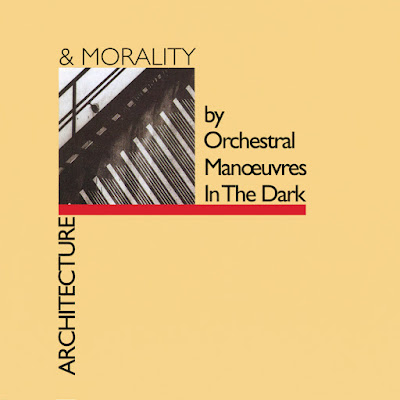
ORCHESTRAL MANEUVERS IN THE DARK - ARCHITECTURE & MORALITY @ 40


November 5th marks the 40th anniversary of the release of the third album by OMD (Orchestral Maneuvers in the Dark), Architecture & Morality, which was issued on this day in 1981. It’s an album that redefined electronic music’s potential, though it was clearly a shot over the heads of some critics of the day.

At the time work began on the A&M album, OMD were looking to infuse a fresh sense of warmth and humanity into the often cold, mechanical landscape of the growing electronic music scene. This was a trend that was working its way through the ranks of other synth driven artists like John Foxx, who’d done an about-face from his debut solo album, with all it’s grey metallic machinations, to the green of forgotten gardens with his follow-up. For OMD, their inspiration for where to find warmth and humanity in their music came from religious choral music, thanks to some experiments from former OMD member, David Hughes, who was using the group’s studio to tinker with some processed choral recordings he’d made. Though the group were themselves not religiously inclined, they appreciated the power and emotive capacity of the music. With this in hand, they focused on historical themes and characters to provide a conceptual framework for the album.

The title was suggested by Martha Ladly (Martha & the Muffins) after the 1977 book Morality and Architecture by David Watkin. The group felt that the duality suggested by the words perfectly meshed with their desire to take the rigid “architecture” presented by electronic instruments like drum machines, sequencers and synthesizers, and balance them with the “morality” of the human experience. The cover by acclaimed designer Peter Saville, known for his work with Factory Records and Joy Division, austerely reflected this concept and reinforced the thematic integrity of the entire project. Ladly & Saville were, incidentally, romantically involved at the time the album was produced.

Musically, the group went to great lengths to expand their sonic palette beyond the usual synths and drum machines, incorporating acoustic instruments, guitars and especially a vintage Mellotron, a rather unwieldy keyboard contraption that predated digital sampling by utilizing banks of audio tape loops of real instruments to create its sounds. Its presence often lends a haunting sense of surreal romanticism to the album’s aura. Structurally, the songs have a stately, procession type of movement to them. There’s a sense of drama and scale, though never bombastic or overblown. The results come across as heartfelt and sincere as they delve into the history and impact of their subjects.

The initial critical response to the album was baffling and mixed, however. After putting so much into this project, the group were taken aback by how harsh some critics were. Lynden Barber of Melody Maker wrote, "I don't believe the Orchs even care about this record... the style is the same, the content profoundly different, the onslaught of emptiness, frivolity disguised by furrowed brows, a new brand of meaninglessness." The response of the listening public, however, was immediately enthusiastic and the album spawned no less than three hit singles in the UK and European markets. The tide of negativism from the critics soon shifted, however, as the fog began to clear from their perception of the album and people began to comprehend the scope of what the group had accomplished. The critical standing of the record after 40 years on the shelves now puts it solidly in the “classic masterpiece” category with it frequently topping “best of the 80s” lists.

For me, it was my gateway drug for OMD and still sits as their high water mark as far as my personal estimation of their career is concerned.

2021-11-01

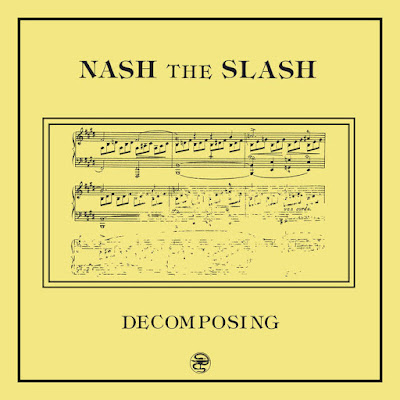
NASH THE SLASH - DECOMPOSING @ 40


Celebrating its 40th anniversary this month is Nash the Slash's groundbreaking EP, Decomposing. Released independently on Nash's Cut-Throad imprint, it was claimed to be the first album to be playable at any speed, though I'd suggest Boyd Rice may have something to say about that with his "black" album offering similar potentials a few years earlier. Regardless, it was still an innovative approach and marketing strategy. In actuality, the recordings did lend themselves to working at the various speeds available on a standard turntable. They were all instrumental and heavily processed and electronic, so the concept proved to be entirely practical without making the music sound "wrong" (though at 78rpm, it may have felt a bit "rushed"). It likely occurred to Nash to do this after his first EP, Bedside Companion, was inadvertently played at the wrong speed on a radio show. That error eventually lead to that EP being released on CD in both its native 45rpm speed AND the 33-1/3rpm variation. The original vinyl version of Decomposing has since become a rather rare collectors item given that it was only ever independently released in Canada and not licensed to any European market like his other Cut-Throat titles. For me, it's one of my favorite releases from Nash along with the Bedside Companion EP and the Dreams and Nightmares LP.

CHRIS & COSEY - HEARTBEAT @ 40


40 years ago this month, in November of 1981, Chris & Cosey officially stepped out of the Throbbing Gristle shadows and began their career as the dynamic duo of electronic music.

It wasn't long after Chris Carter joined Genesis P-Orridge, Cosey Fanni Tutti & Peter Christopherson to form Throbbing Gristle that sparks began to fly between him and his future life and creative partner. By the time TG began to spiral down towards their termination, Chris & Cosey had already started working on material that would end up on their first post TG album. Heartbeat would come as a celebration of their new freedom and the beginning of their life together as they became a family with the addition of their soon to be born child, pictured in an ultrasound on the cover and commemorated by the title. It's an album about birth and new life and is bursting with a sense of liberation, enthusiasm and optimism about facing the future. While it still hints at some of the darkness that was the hallmark of TG, there's much more of a sense of beauty and wonder about it all as they were in the flush of their romance and finally being able to live openly and create freely within their own domain. Signing to Rough Trade records, the duo were able to focus on the music without having to deal with the administrative issues of running an independent label, though they'd eventually get back to doing that soon enough.

For me, Heartbeat is a critical release within the arena of electronic music as it offers clear signposts towards styles and approaches which would become foundational for the future of the genre, particularly as the 80s ran out the clock in its final years. What makes this album so important is that it was so far ahead of the curve and ended up becoming a touchstone years later as producers inspired by the first waves of the techno & acid house movements began to look for ideas as to where to take that music as they strove to innovate and evolve. Many people quickly began to realize that Chris & Cosey had already plotted out the paths of where to go, nearly a full decade beforehand. As such, the album has retained a certain vitality and timelessness as it was so effective in opening the floodgates for the potential of electronic music for generations to come.

2021-10-31

PINK FLOYD - MEDDLE @ 50


Celebrating half a century on the planet today is Pink Floyd's sixth studio album, Meddle, which was released on October 31st, 1971. It's an album which represents a bridging period between the early Syd Barret era psychedelic rock band and the prog-rock super-group which would emerge with the landmark release of Dark Side of the Moon in the spring of 1973.

While the group was making definite movements towards a much more accessible sound after the challenging obscurity of the prior two albums, Ummagumma & Atom Heart Mother, they weren't quite settled on the conceptual underpinnings which would form the framework of the albums that came after Meddle. The fact is that there's no overriding theme to integrate this album and it was produced over the course of the preceding year in fits and starts between live performance commitments around the globe. As such, the recording process was often fragmented, drawn out and frequently unproductive. It's actually quite surprising how accessible this album is given that the group indulged in so many esoteric experiments in order to try to spur on their creativity. Most of those ended up yielding very little, like the idea of each member recording their part without any reference to the other member's recording, only a rough outline of what they should play.

Yet, in the end, they managed to craft a lovely and entirely listenable collection of music, one which has become one of my favorite albums in the group's canon. The hooks and structures, while offering an aura of expansiveness, remain grounded and avoid any overt experimental self-indulgences. It has a dreamy sound that's never disturbed by uncomfortable awkwardness.

While the music itself was a rousing success and garnered critical praise, though modest sales, the cover, provided by legendary '70s design house, Hipgnosis, could be considered one of their weakest efforts. Lead designer, Storm Thorgerson, initially suggested a close-up shot of a baboon's anus, but the band wisely (or not?) vetoed that suggestion and instead offered the idea of a shot of an ear underwater, which is what he went with. Storm always felt it was a lackluster effort and considered it his worst contribution to the bands album covers.

Middling cover graphics aside, it's a thoroughly enjoyable listen from start to finish and an album I return to quite frequently when I need a Floyd fix.