2019-11-10

THE PAPER AGE - MUSIC BEFORE THE INTERNET


I’ve been contemplating life before the internet lately, specifically how I acquired information about music when I first started collecting it.  Long before there was a Google or Discogs or YouTube, one had to do a bit of reading the old fashioned way, in printed media, in order to learn about things that were happening in certain corners of the world.  Of course, there was radio and TV available to expose some of what was going on, but by and large, those media outlets focused on the mainstream  in a fairly superficial way and you had to go to other sources if you wanted to discover anything off the beaten track or more in-depth.  You might see the odd new wave act on Midnight Special or Saturday Night Live, but the music press was where you got to know these artists in detail and discover what they were doing and when.

I first started to collect records when I was 13, back in 1976.  Soon after that started to develop into a serious interest, I also discovered there was a variety of magazines on the shelves of my neighborhood corner shops with all sorts of fascinating stories of my favorite performers and their adventures, interviews with the them and reviews of their work.  It didn’t take long for me to get just as hooked on these as I was on the records.  So much so, in fact, that I got to the point where I’d use my lunch money to buy magazines instead of eating.  I’m thinking now that this may have been part of the reason I got so svelte in my last year of high school.  Oh well, food is over rated! 


The first publications I came across were rags like Hit Parader, Circus and, occasionally, Rolling Stone.  I never got into RS much because there were a lot of non-music articles and that stuff just didn’t interest me.  I only wanted to read about rock stars.  The other two were pretty light weight, however, and I found them to be a bit sycophantic, even at my young, naive age.  But then I came across CREEM and that one really caught my fancy.  It was not so concerned with stroking rock star egos or cheap gossip.  I didn’t understand it at the time, but it was more akin to magazines like National Lampoon and harbored a kind of “gonzo” style which often took great delight in ridiculing some of the subjects covered in its pages.  The captions to the pictures were a clear case in point.  Every one of them was a joke, often at the artist’s expense.  You never got a serious comment in the photo captions.  And they had writers like  Robert Christgau and the notorious Lester Bangs, who made an art of taking the piss out of the folks they covered.  Bangs’ LP reviews were some of my favorites.  I recall one he did for Queen’s Day at the Races that read like a bad trip and I’d never even done drugs yet.  


Eventually I discovered a used book shop downtown and it’s shelf full of old magazine back-issues.  This became a regular haunt for me and I was able to find many of the older issues of CREEM going back to the early 1970s.  This became a priceless resource to me and gave me a lot of background on my favorite bands and their history.  On the other end of this spectrum, the new issues of CREEM that were coming out at the time were starting to clue me in to a lot of new music that was coming out of places like New York and London.  They began to feature bands like the Sex Pistols, Ramones, Devo and Elvis Costello.  I remember seeing an issue with Johnny Rotten on the cover and, at the time, I thought he just looked stupid and weird and found it all rather annoying.  It wasn’t until I began to get dissatisfied with the tedium of top 40 rock music that I started to wonder what all the fuss was with these new groups and why they were getting so much press.  


Like a damn bursting, my curiosity soon got the better of me and I went out and started buying records by these people.  I can actually remember a day, flipping through the pages of a magazine in my bedroom, where I made a conscious decision to go out and buy some of these records.  It started small, with The Cars, then The Clash, Ramones, Costello, Devo and, finally, the most naughty band of all, The Sex Pistols.  I remember putting on the first Clash album and feeling like someone had blown the dust off my mind to reveal it's bright, shining surface.  I remember pulling out the lyric sheet for the Ramones' Road to Ruin and being gobsmacked that there were so many songs with just four or five lines of lyrics.  And they were fucking hilarious!   It was a few days of complete revelation that would trigger a lifetime of exploration and it all came from some ratty little music magazines.

Soon, I was on the hunt for even more magazines that featured these bands.  This is when I came across rags like Rock Scene and Punk magazine.  They were both very New York centric and featured all the CBGBs bands.  Rock Scene had a LOT of press for Patti Smith, thanks to her hubby, Lenny Kaye, being the editor.  I must admit I kinda got turned off a bit to Patti for a bit because her features in the magazine became so gratuitous and obviously so.  But still it was a valuable reference, though pretty light weight in terms of coverage of these bands.  It was mostly a scenester, “who’s with who”, kinda vibe.  Punk Magazine seemed to be the most underground and hardcore at the time.  I’m actually pretty surprised, looking back, that it ever landed in a middle of nowhere town like Thunder Bay, ON.  But it somehow managed to find its way into my hands and gave me another perspective into the alternative music scene.   


In 1979, the ultimate underground magazine started hitting the local stands, Trouser Press.  This was the most out there publication I’d managed to come across and it was in its pages that I first read of names like Throbbing Gristle, Cabaret Voltaire, The Residents and others who were truly foraging on the fringes of experimental music.  I became obsessed with snapping this one up as soon as it hit the stands.  It was coolness in print.  And it wasn’t easy to find as only a couple of places carried it, so I’d be on the lookout for each new issue with hawk-eyed determination.  It wasn’t a fancy looking magazine either.  It was plainly designed in terms of the graphics.  But it had the best written articles and most thoughtful reviews I’d come across.  Though the irreverence of CREEM was entertaining, it was nice to have something that really dug into the new music with a more serious tone. 

Sometime in 1980, the next phenomenon to hit my collecting obsession arrived in the form of the “import”.  The little record shop I favored, Records on Wheels, introduced a small bin of LPs labeled “Imports”.  The concept was utterly new to me, but I soon realized there was a whole world of music being released in other parts of the world than never got released in Canada.  Now, most of these ended up being imported from the UK, but that was enough as all the strangest stuff seemed to get released there.  Along side these import records, the shop also started getting UK music papers.  Things like NME and Sounds started showing up and these were a whole new world of music journalism. 

I even discovered I could purchase records directly from these papers.  They had classified ads in the back pages.  This is where I found I could actually get a copy of the holy grail of albums for me at that time, Public Image Ltd’s Metal Box.  I’d read about it in some publications and it had a sort of mythical allure about it because it was so exotic sounding.  The standard double LP version had been released in Canada and I'd fallen in love with it, so there was no question that I needed it in its original format.  Finding out it was just a matter of calculating the currency exchange and sending off a money order was thrilling to me, but also nerve-wracking.  This was, of course, long before internet or cheap international phone calling, so putting money in the post and having to wait three months in the blind hope that something would come back was a bit daunting.  But it worked and, after duly and patiently waiting, I had my hands on my treasure, greedily drooling over it like Gollum with his “precious” ring!  


When I moved to Vancouver in 1982, I continued to buy the UK papers as much as I could afford to, though I would often just read them in the import record shop that got them in.  In Vancouver, it wasn’t just a bin in the shop that sold imports, it was an entire store dedicated to them.  I swear, the first time I walked into Odyssey Imports, I was like Dorothy prancing through the gates of the Emerald City.

As I got settled in a new city, I found I was buying fewer and fewer magazines.  Trouser Press ceased publication in 1984 and CREEM in 1989 (though it kinda lost its edge a few years before that and I stopped collecting it).  The UK papers still had some attraction, but by the early 90s, I wasn’t buying records much anymore because I was so poor.  There was also the transition to CD going on and CDs, particularly imports, were going for stupid prices like $40 a pop!  It’s funny now that’s the average price for a domestic piece of new vinyl these days, but you practically can't give a CD away. 

It wasn’t until the dawn of the new millennium that I was set up with a proper computer, a high speed internet connection and a functioning credit card so that my collecting bug could lurch back to life and i dove head first into the world of online shopping.  I was working a decent job with a reasonable bit of disposable income at hand, so no limited edition collectible was out of reach for me and I had the tools to track who was releasing what and also follow recommendations for new artists.  I had automated “sniper” tools for buying on Ebay so I could snap up rarities at the last second.  I went a bit nuts, I must confess.

These days, I’m poor again, but the internet and YouTube have offered me a new way to indulge my music mania and I’m swimming in an ocean of music, both old and new.  While I love the convenience, I do still have fond memories of those bygone days of picking up a magazine and reading about some strange new artist.  I was thinking the other day about the old ads from Ralph Records for The Residents and that got me inspired to write this piece.  I recall the strangeness and mysterious infatuation with their mystique that drove my imagination.  That sense of wonder is so much harder to find or create these days. 

These days, I don't read much about music, particularly reviews of albums.  I find I don't rely on them to discover new music anymore.  I use my own judgment as to whether I want to investigate something because I can always preview it, usually on YouTube.  I use Discogs "Explore" feature to play with search filters to find interesting combinations of genres and styles.  I still read the occasional interview or analytical article, perhaps on an old release being re-appraised or celebrating an anniversary.  But I look at magazine racks in the stores and there's nothing there anymore for me to pick up.  All the music magazines have pretty much vanished or you have to go to some out of the way specialty store to find them and I can't be bothered. 

I used to have a huge box of all my old rags I'd kept for many years.  I think I may have held onto them until the end of the 1990s before I finally dumped it all.  I wish I still had them now.  Some are available online, but it's not quite the same as holding it in your hands.  Kids don’t understand it now, but I remember it and I’m glad I got to bridge both worlds.

2019-11-09

ONE AND DONE

ARTISTS WHO RELEASED ONE LP


I recently posted a daily series for a week on "One LP Wonders".  This involved digging up some bizarre, obscure albums by bands/artists who released one album and that was it, there was nothing else from that configuration of people. This means one completed studio album, not live albums nor compilations of unrelated or previously unreleased tracks. I aimed to dig up stuff that didn't get much attention, but deserves it. The following are arranged chronologically. 

The United States of America (1968) 


In 1963, aspiring avant-garde composer and musician, Joseph Byrd, was in New York, studying music and participating in the Fluxus experimental music movement along with contemporaries such as John Cage, Morton Feldman, LaMonte Young, David Tudor & Yoko Ono.  While there, he met vocalist and fellow music student, Dorothy Moskowitz.  The two began a personal and professional partnership which would see them relocate to LA later that year. 

After a time, Byrd, who was rather politically motivated and had joined the Communist party, decided that popular music, specifically the more psychedelic rock of the late 1960s, would be a suitable vehicle for him to express his musical visions while also communicating his radical political views.  To this end, he recruited 3 additional band members to augment his various electronic keyboards and Dorothy’s vocals.  The band coalesced with the addition of Gordon Marron (electric violin, ring modulator), Rand Forbes (electric bass) and Craig Woodson (electric drums, percussion).  Together, this quintet would create their one and only self titled 1968 debut. 

Byrd chose the name of the band for deliberately provocative purposes, reasoning that it was similar to hanging the flag upside-down, as a symbol of distress and to  draw attention to the problems facing the country.  The band’s structure was unusual for the time not only for the emphasis on the then emerging new electronic instruments (synths and ring modulators, etc), but also for its lack of guitars.  With no real experience creating “rock” music, Byrd went into composing and arranging the album with the sensibilities of a contemporary, experimental classical composer, something he later regretted due to his naivety.  However, the resulting recordings were striking in their strangeness and unique approach to the medium. 

At the time of its release, the album gained little traction and the group quickly disintegrated in a frazzle of personality clashes and musical differences as they each pulled in different directions.  This even went as far as petty instances of “volume wars” between musicians on stage and fisticuffs after shows.  The group duly disbanded and it’s members pretty much all went on to more rewarding careers.  Byrd went on to do film and TV scores and teaching, Moskowitz also took up teaching and making children’s music while the others had mostly successful session musician careers. 

It would be years later that the album would be recognized for its truly pioneering approach and incorporation of cutting edge electronic instrumentation along with the likes of groups like Silver Apples.  Personally, I discovered the LP in 1983, shortly after moving to Vancouver.  I was sharing a rental house main floor with some band mates and the manager of the property had a small garage in the backyard which was filled with his massive record collection.  It was wall to wall, floor to ceiling, packed with shelves full of thousands of records.  He took a liking to us being musicians and gave us free access to search through and borrow records.  The United States of America stood out for me immediately when I looked at the cover and saw pictures of the electronics.  I was not disappointed by what I heard.  I recorded a few samples from it on reel to reel, but it wasn’t until 2004 that I finally got a CD copy and had a chance to enjoy the album in all its remastered glory. 

Today, it persists as a distinct product of a strange time. For it to stand out against the backdrop of so many other musical achievements is truly remarkable. 

Cromagnon (1969)


Cromagnon’s eponymous 1969 release (alternately titled “Orgasm” or “Cave Rock”, depending on the re-issue) stands as a singular outlier artifact of 1960s psychedelic rock. Calling it “rock music” is even a bit of a stretch. In so many regards, this album exists well outside just about any convenient classification and even this fact seems anomalous. The core group founders, Austin Grasmere & Brian Elliot, were primarily known for their group, Boss Blues, who released a couple of very conventional and unremarkable psyche-pop singles in 1967 & 1968. By 1969 however, Grasmere and Elliot were possessed by some sort of very strange, inexplicable muse when they embarked on this pastiche of noise, tribalism and altered states. There are moments on this album that could have dropped in from the future by groups like Nurse With Wound. Indeed, there’s much about this album that is completely anachronistic to the times and belongs in another era that wouldn’t become defined for another decade or two. 

The album is something of a hodgepodge of styles and techniques with mad experimentation the only unifying thread. Sometimes things work better than others, but there’s always a sense of wonder in the attempt. What they were trying here is simply so unprecedented that the results of it still don’t quite jive with anything else that was going on at the time nor since. From the opening, Caledonia, with it’s thundering drums, screeching bagpipes and whispered vocals, the stage is set for something completely different. And you get it with the abrupt shift into the next track. It’s built around incoherent grunting and torturous screaming and a sparse percussion with some unknown noises going on in the back. The madness continues with a percussive free-for-all (courtesy of random people plucked from the street outside the studio) on the third track, which also incorporates a myriad of voices intoning “sleep”, while you know you’re not getting any with this racket. The weirdness continues along until we get a bit of a respite on the 5th track with something almost musical, in the spaghetti western vein, with the fifth track, Crow of the Black Tree. This one wouldn’t have been out of place on the first Psychic TV album or as something by Current 93. The rest I’ll leave for you to discover on your own.

Obviously, at the time of its release, it garnered little in terms of audience appreciation or attention, but it eventually became infamous for its idiosyncrasy. It’s creators, on the other hand, seem to have sunk into obscurity after its release. As a result of its snowball effect in terms of its notoriety, it has seen numerous re-issues, both on LP and CD, over the intervening years since its original release. I came across it sometime in the 2000s when I spotted a CD reissue listed in the Forced Exposure online catalogue and couldn’t resist checking it out. It’s not for the faint of heart, but it rewards those who appreciate true, bold experimentation.

Mustafa Özkent Ve Orkestrası - Gençlik İle Elele (1973)


Beginning his career in 1960, Turkish guitarist, Mustafa Özkent, quickly became an in-demand session musician, arranger and producer, but it was a unique group effort which has transported his name outside of his native country and given him his reputation as a musical “Dr. Frankenstein” beyond his Middle Eastern roots.  After spending his career in the 1960s and the beginning of the 1970s doing session work in Turkey, he secured a recording contract with Evren Records, a company renown for their high fidelity recordings.  In 1973, he set about assembling an “orchestra” of hand picked instrumentalists.  With this band assembled, they began working on a collection of Mustafa’s original compositions which would be released that year under the title, Gençlik İle Elele, Turkish for “Holding Hands with Youth”.

The album offered up a veritable “Güveç” (Turkish stew) of cross cultural references, combining elements of traditional Anatolian folk music with western pop influences of funk, psychedelic rock and jazz. The album cover featured a chimp mischievously manipulating a reel to reel tape recorder, securing the album’s perception as the oddball concoction of a mastermind of sonic non sequiturs.  Though it’s initial release in 1973 failed to generate significant attention, over the years, it began to lurk within the nether regions of cultish collectibles until it was eventually reissued in 2006.  This reissue brought the LP to a whole new audience and widespread, long overdue, acclaim.  I came across it only recently as I was spelunking through Discogs’ database, looking for unusual lost gems to add to my library.  This one caught my attention because it cut across so many disparate musical categories.  It has since become one of my favorites in the realm of vintage instrumental grooviness.

This was Özkent’s first release under his own name (and the only one as a “group”) and, while his subsequent solo albums have sustained his reputation for musicianship, stylistically, he never again managed to capture the sense of kitschy “Middle East meets West” funky fresh goodness which reverberates from every groove of this album.

Wolfgang Riechmann - Wunderbar (1978)


Wolfgang Riechmann began his musical career in 1966, lingering around the Düsseldorf music scene. His early projects included the group, Spirits Of Sound, founded by Wolfgang Flür, who would go on to join the “classic” Kraftwerk lineup from 1975-1986, and Michael Rother, who would also spend some time in an earlier incarnation of Kraftwerk as well as founding the bands Neu! and Harmonia. In 1977, Riechmann joined the progressive rock group, Streetmark, essentially taking over for their 2nd LP, Eileen. He then decided to go solo for his next recording project, recording the 1978 LP, Wunderbar. Here, he wrote and performed everything except the drums. Tragically, before the LP’s release on Sky Records, Wolfgang was randomly assaulted and stabbed to death by a couple of drunken thugs on the streets of Düsseldorf. His one and only solo LP stands the test of time as a classic example of German synthesizer music on the cutting edge of the genre. We can only imagine what more he could have done had he survived, but at least we have one solid collection of his brilliant works.

Masstishaddhu - Shekinah (1988)


Masstishaddhu was a one-off collaboration between Mike Watson, Richard Rupenus & Sean Breadin.  All three were associated with John Mylotte’s ritualistic improve collective, Metgumbnerbone and there are also connections to other experimental projects such as The New Blockaders, Bladder Flask & Nihilist Assault Group.  In 1988, this trio recorded the two side-long drone pieces for the LP, Shekinah.  It was released on Steven Stapleton’s label, United Dairies, in an edition of 1000 copies.  Stapleton also provided the cover graphics.  The album would eventually get a small CD re-issue in 2000 on Psychedelic Pig, a small mail order label which only released a handful of rare experimental titles before folding in 2005. As such, it has remained an obscurity among most fans of dark, occult-inspired ambient and drone music. 

I came across the release when it originally showed up as an import in Vancouver, shortly after its release.  As an avid Nurse With Wound fan, its being released by UD was something that caught my attention as potentially interesting and I wasn’t disappointed.  The two side long drone pieces feature moaning voices, guttural groans (reminiscent of Tibetan religious music), sinuous strings and primitive percussion.  It’s all beautifully recorded and mixed in high-fidelity, which is uncommon given the production values of most of the other projects tangentially connected to this.  Most of those were recorded on primitive cassette formats with little in the way of studio polish.  The addition of proper recording quality makes this a particularly enjoyable listen as it captures all the nuances of the voices and instruments being used.  If you’ve got any sacrifices or special magical moments requiring a suitable soundtrack, this is a fine option for summoning a serpent or some other denizen of the deep.

Trancendental Anarchists - Cluster Zone (1994)


In the 1990s, Kim Cascone’s Silent Records was something of a hotbed of electronic music, especially stuff on the more ambient end of the spectrum. At the time, being the pre-internet days of having to go and buy books to get knowledge, I was very deep into my esoteric and occult literature. Kabbalah and Crowley were dominant in my library and I was looking for music which reflected that. Bands like Ambient Temple of Imagination had caught my ear and it was through their association with Silent Records that I came across Trancendental Anarchists and their 1994 CD, Cluster Zone. Created by Australians, Pam Thompson & Paul Bambury, my research on them has turned up very little beyond a few guest credits here and there on a smattering of not-so-notable projects. As such, this one CD stands as their primary contribution to the world of music, but what a wonderful contribution it is! The album offers up 8 longish pieces, soaking in the thick atmospheres of ancient mysteries and melding in hypnotic, techno-tribal rhythms to send you into your inner-space journeys. It’s perfect chill room material and really lets the listener lose themselves in the mood of each piece. It’s a collection of moods and movements that was fairly neglected then and now. I’ve come across little indication that this has garnered any real following over the years, but it does deserve some attention as one of the more nuanced and intricate tapestries of sound out there for the “coming down” set. Thankfully, the re-activated version of Silent Records has reissued the album in digital form for a new generation of tweakers and travelers to discover.

Daiquiri Fantomas - MHz Invasion (2013)


Founded in 2010 by Sicilians, Marco Barrano and Dario Sanguedolce. Daiquiri Fantomas released their one and only LP to date, MHz Invasion, in 2013.  Aside from a couple of Cdr singles from the album, the duo has yet to realize a follow up.  Since it’s been 6 years waiting, I decided these guys qualified for the “One and Done” category, as it seems like they’re pretty much over and out at this point. Other than this album, only Dario has any other releases to his credit that I can find, which consists of one solo track on a 1993 compilation album.  So, for all practical purposes, this is the beginning and end of the line for this duo, which is a shame because this album offers a truly inspired collection of retro sci-fi progressive-rock, electro-acoustic excursions into the outer realms.  With one foot in the past and one in the future, the duo combine a spectacular array of acoustic and electronic instruments in order to engineer their distinctive brand of post-modernist music.  This is another release I discovered while rummaging through the Discogs database, playing their genre and style filters off against each other until I narrowed my results down to this unique combination of influences and styles.  These include modern classical, progressive rock, jazz, psychedelic rock, electronica and pop music.  If science fiction, Italian style and 70s fetishism are your thing, then this is the album for you!

2019-10-29

METAL BOX AT 40


METAL 1


Forty years ago, on November 23rd, 1979, Public Image Ltd unleashed their second "album".  Its initial release was in the UK, coming a year after their debut LP.

That "First Issue" had come at the tail end of 1978, a year which had begun with the infamous Sex Pistols disintegrating while wrapping up their one and only US tour.  In the wake of that chaos and all the recriminations surrounding their demise, Johnny Rotten, now back to being John Lydon, went on vacation to Jamaica where he scouted reggae acts for Richard Branson before returning to the UK to get back to the business of making music himself.  Once home, he recruited a couple of friends for his new venture; a bass player who didn't know how to play bass plus an ex-Clash guitarist.  A quartet was completed with a Canadian drummer found via a music press classified ad.  Together they knocked up an album which was greeted with a mixture of suspicion, contempt and occasional praise.  It was an uneven affair, offering glimpses of genius when they'd been able to pay for proper studios and production, but it lagged in spots once the money ran out and they had to tack on rushed pieces recorded in budget studios.  In at least one self declared case, they "only wanted to finish the album with a minimum amount of effort".  It was a contentiously auspicious debut that demanded an unequivocal follow up for this entity to be taken seriously.  So during the beginning months of 1979, PiL set about assembling new tracks while churning through drummers like toilet tissue. 

Prior to it's release, Metal Box was buffered by two singles, Death Disco (issued in June) and Memories (in October).    Both of these set the stage for what was to come, but no one was really prepared for the full force of the post-punk monolith which was about to descend.  Recorded in fragmented sessions at various studios throughout the year, Metal Box rolled out of the gate while smashing it to pieces along the way.  It was unlike anything anyone had seen or heard before, both in structure and content.  Housed in a logo embossed circular metal canister, it contained three 12" 45rpm "singles" with a dozen tracks spread across them and a  running time of about an hour.  It posed questions on every level, from how to get the records out (they were so tightly housed, you'd have to shake the container and try not to scratch or drop them as they tumbled out), to what order to play them (play order was meant to be flexible) to what kind of stereo system was capable of reproducing the sound in the grooves (I personally know people who bought whole new audio systems in order to handle the extremes of bass and treble contained on those records).  


Where their first LP had indicated movement into new musical directions, such as the nine minute dirge of Theme, it still retained remnants of what could legitimately be called "rock & roll" on songs like its title track and Annalisa.  This new product, however, left those conventions behind on all fronts.  There were elements of disco, dub, German "motorik", martial music, funk and some unidentified strains in the mix.  That "mix", itself, was another thing all together.  The bass was front and center, pushing the capacity of the medium to reproduce it.  Guitars & synths buzzed, scraped and squalled in thin ribbons across the top.  Drums were generally utilitarian, minimal and repetitive, providing support for the bass, but never offering too much flash.  Kick drums were EQ'd with enough thud to pop needles out of the grooves and hi-hats sizzled with enough top end to fry bacon. Occasionally, a drum track was no more than a tape loop of a simple beat.  Lydon's voice moaned and squeaked or screamed in vacant hallways, always sounding lost or distant.  Even the editing of the tracks was fair game for mischief.  Some tracks would abruptly cut off and bump into the next.  Sometimes it sounded like the tape player was shut off or switched on as the music did a sharp pitch drop into a halt or lurched to a start.  A song might trail off into the locked groove at the end of the record and either loop there indefinitely or be roughly snatched away by the auto-return kicking in on the tone arm.  It all felt inside-out, like a building with the plumbing and wiring deliberately showing on the outside.

SECOND EDITION

It wouldn't be until early in 1980 that the album would find its way into my 16 year old hands in Canada.  By then, it had been reissued in a more conventional double LP format, in a standard gate-fold cardboard sleeve, as "Second Edition".  I remember going into Records on Wheels, which had opened up recently in a little strip mall next door to the Burger King where I worked, after my shift on a cold April day in Thunder Bay, ON.  I spotted it instantly as I entered the shop and saw it on the wall in the new releases section by the entrance.  I'd heard of PiL by then, but never heard them.  The first LP was never released in Canada, so I had no idea what they sounded like.  I didn't even know if this was a different album from the one I'd read a review of in CREEM magazine the year before.  I knew I had to check it out, so I plunked my hard earned burger flipping money down and then had to wait until later that evening to hear it.  The whole family went out that night to visit friends, so I spent most of the evening staring at the cover graphics while the adults talked and drank.  


I was fascinated by the photos on the front and inside the gate-fold.  I didn't know who was who yet.  I knew what John Lydon used to look like, but not the rest of the band and the distortion of the warped image effect used made it nearly impossible to tell which one was him.  The cover also had all the lyrics printed on the back.  They weren't originally included with the Metal Box edition due to cost, so PiL had run an ad in one of the UK music papers with the lyrics printed in it so people could take that and fold it up to stick inside the tin.  They were in the same hand written style in both cases, I'm assuming in Lydon's writing.  They weren't in the same order as the songs on the LPs, so when I did finally get to hear the records, it took a bit of sorting to figure out which song was which.
 

When I finally did get home that evening, I went to the big old wooden console stereo system in the living room, grabbed the headphones, set myself up in a comfy chair and dropped the needle on the first track.  It wasn't a great system, so I didn't have the best first listening experience, but it was good enough for me to be able to appreciate how different this all was.  Looking at the labels on the records, I noticed the run times for the track listings.  Side one started with Albatross, which clocked in at an intimidating 10 minutes!  I wasn't used to songs being much longer than 3 or 4 minutes.  Maybe 6 was long when you're talking about something like Bohemian Rhapsody or a Zeppelin track and, in those cases, they were intricately orchestrated with major changes in structure and arrangements as the track progressed.
 

YOU ARE UNBEARABLE

Albatross kicked in and I was immediately anxious and anticipating when it was going to start changing.  After a few minutes in, it became apparent it wouldn't.  Jah Wobble's bass line comes in first and it sounds lazy, like it can barely stand to differentiate the three notes it keeps repeating.  It doesn't even want to try to do anything but lumber along.  And it's so deep!  It's just this rumble under the floorboards.  It sounds scary and maybe a little pissed off about something. Brooding?  Yeah, that's the feel.  Then the drums start plodding along and this scraping, screeching noise from Keith Levene's guitar comes in like a carrion bird way up in the sky, circling and waiting for something to die so it can swoop down and gorge itself.  The ghost of Johnny Rotten then looms up from his grave and starts moaning about something he can't get rid of.  His thoughts are fragments, piecemeal musings you might extract from a cadaver's brain.  "Frying rear blinds"?  What does that even mean?  It's bits and pieces of ideas and images, but there's a sense of exasperation  and boredom.  What's he on about?  Is it his career and fame?  Is it the carcass of rock & roll being flogged like that dead horse?   "Slow motion... slow motion..."  The whole thing fucks with your sense of time.  It goes on so long and is so ruthlessly repetitive, that you lose any sense of time passing.  Everything stands still.  Then it's over and the last thing you hear is that squalling vulture flying off into the distance.

IT SHOULD BE CLEAR BY NOW

Next up, Memories kicks off with some pep as the tempo picks up.  Now, the bass is hollow sounding and bouncy while a disco beat pops along, encouraging some toe tapping.  A curtain of vibrato guitars starts shimmering in the background.  There's something vaguely Latin about it, like flamenco or something, but it's not even certain what instrument you're listening to.  It sounds a bit like an organ too.  There's a flurry of notes that dance around, but they never quite create a melody.  It's merely a suggestion of conventional structure.  Lydon's voice comes in with a sneer and declares he's "had enough of useless memories" and proceeds to tear into the concepts of sentimentality and nostalgia.  Then, just when you think you've got a handle on things, the entire mix suddenly cuts to something completely different.  The bass is back to booming again.  The drums are heavier now too, with the kick threatening to bounce the stylus right out of the grooves.  It's all compressed so that the loudness of the track hits the maximum and you can imagine any VU meter pinned to the top when the mix cuts over.  That curtain of Spanish moss is now a wall made of steel and it's pushing that voice as it bellows and snarls about being "used" and "dragging on and on and on and on and on AND ON AND ON!"  Back and forth, the song snaps between the two mixes until it goes careening out of sight.  As previously mentioned, this song was released as a single, but that version only used the bottom heavy mix throughout and did not have the abrupt edits between mixes.  Personally, I can never really decide which is more effective, though I tend to favor the single most of the time, but the juxtaposition of the two mixes on the LP was a fresh, jarring concept and executed flawlessly. 


FLOWERS ROTTING DEAD

By the time I'd finished the first side, I was feeling like I'd been punched in the head in the best way possible.  My initial apprehension was replaced by an exuberance as I could feel the sense that something new was taking hold in my brain.  Flipping the record over, the next track up was Swan Lake.  This had been released in a more stripped down, rough mix as Death Disco in the summer of that year.  This finished mix would take the rawness of the single and refine it into a truly heartbreaking exploration of loss and death.  The song was written by Lydon about watching his dear mother pass due to the ravages of cancer.  His delivery during the song is nothing short of agonizing.  There's no measuring or muting his suffering and he lets it out with every excruciating wail of "words cannot express!!!".   Again, a disco beat provides the bedrock while Wobble's bass thunders with the tension and anxiety of an anxiously racing heartbeat.  Levene's repeating guitar and synth motif, borrowed from Tchaikovsky's Swan Lake, creates the sense of mourning and lamenting the loss of a loved one.  The emotion in the song is so raw and uninhibited, it's very strange to see the promo video made for it as the band seem to be mugging it up during their miming of the track for the camera. On Second Edition, the track spins into a frenzy before before being abruptly cut off by the next track while, on Metal Box, it bleeds into the run-out locked groove to find its terminus.


THE SMELL OF RUBBER ON COUNTRY TAR

Things abruptly switch to the next track, Poptones.  The song tells the tale of kidnapping and murder, snatched straight out of the headlines of the tabloids.  It's almost beautiful, musically.  Keith spins a delicate spiderweb of guitar notes, cascading down upon each other and churning like a glittering Ferris wheel.  I say "almost" because it's all a bit like a bouquet of flowers that has died on the dressing table.  The tale being told is past tense, so there's no sense of urgency or threat.  There's only the aftermath as the deceased in question relates its own demise, the sound of music playing on a cassette in the car communicating the dispassionate telling of this sordid true crime story.   A walking bass loops around along with the guitar, meandering through a cycle of notes while the drums tumble along for the ride.  It's a dizzying swirl of sound as we feel the chill of a car boot in the country air and the "wet" of the dirt while we lose our "body heat".  Lydon intones the vocals in a cracked, reedy tone that reinforces the detachment from any direct experience.  Faintly in the background, his voice echoes down into the vortex, barely audible amid the distortion. 

MANGLED MACHINERY

Cut to the battle field for the completion of the trifecta on side two of the 2nd-E track listing.  The tape machine kicks into gear with a sweep of the pitch and we're marching.  The drums pat out a militant trundle while the bass, deep as usual, pushes underneath,  an insistent drill sergeant, counting out steps as the troops move forward.  All around, synthesizers swirl, discordant and droning, swooping through as teargas lingers on the horizon.  We're going to war, but it's corpses for cash in this modern military industrial complex.  The big money is meticulous and well organized as it poisons the landscape.  Lydon's voice searches for "meaning behind the moaning", but all he finds is dollar signs.  This is not conflict over ideals or beliefs or even traditional material concerns such as land rights.  This is military for money, as a mechanism for generating financial profit.  PiL were predicting the future here and, 40 years on, it's horrifying how precisely accurate their prediction was.  Synthetic gunshots ring out in jarring bursts.  When they hit rapid-fire, it makes you jump in your seat.  It's frightening and relentless and it all ends in a crescendo barrage.


IT IS YOUR NATURE

The next set of tracks gives the listener a bit of a breather.  I'm going by the double LP track listing here for this article as this is the ordering I was ingrained to follow until I finally got a proper copy of Metal Box a good year after first getting Second Edition.  First up are a couple of instrumentals.  Socialist comes staggering out of the speakers like some sort of short-circuiting robot.  The drums are weirdly syncopated with the bass and the whole thing is sprinkled with nothing more than some random synth bleeps and bloops.  This is followed by Graveyard, a track which previously appeared in a different mix with vocals on the B-Side of the Memories single as Another.  It was also recycled by Wobble for the track Not Another, reverting back to an instrumental, on his first solo LP.  It's a rhythmic, atmospheric piece with a decidedly morbid mood, most suitable for some midnight forays to the land of tombstones.  It would make a good soundtrack for waiting for The Great Pumpkin in the pumpkin patch.  This moody, brief trio is rounded off with The Suit, also recycled by Wobble for his solo album as Blueberry Hill.  Here, it's little more than a lonely bass line playing against a tape looped kick & snare with Lydon doing some of his infamous piano tinkling in the background (he often did this in the studio simply to annoy everyone).  Keith is nowhere to be found here.  Lydon's lyrics sneer and snigger at those who live off the ideas of others, never originating anything themselves.  Their look, their attitude, their manners, all borrowed from others and sold cheap to anyone stupid enough to buy into their fake personas.  It eventually  disappears down an echoing corridor to end this set.

ONE MORE SOB STORY

The final quartet of tracks brings us to some of the most harrowing moments of the album.  First up is another story torn from the morning papers, Bad Baby.  This was the audition piece for drummer Martin Atkins, who knocked it out in a single take, thus clinching his hiring by the band.  Here, he drops a minimalist funky beat while Wobble saunters along on bass.  Keith ads no more than the occasional car horn inspired atonal synth stab, but that's enough.  The track doesn't need any more.  Lydon fills in the rest with his recounting of a story of an infant being left alone in a parked car.  It's a story you hear every year, at least a dozen times, still to this day.  Lydon relates it rather offhand and almost distracted, like he's busy looking for gum in his pockets or something.  It's a song about thoughtlessness and that's the feeling that comes across in the delivery.


DON'T KNOW WHY I BOTHER, THERE'S NOTHING IN IT FOR ME

Things start to get harrier with No Birds, the post-punk equivalent to The Monkees' Pleasant Valley Sunday.  In this case, it's suburban malaise taken into discordant abandon.  The drums ripple with tribal toms while the bass pushes them along.  Once more, Lydon's piano is plinking in the background while Keith shaves off sheets of searing guitar.  Lydon's vocals paint a picture of disaffection, "a layered mass of subtle props."  He keeps insisting "this could be Heaven", but you know it's a long way from that.  The song trots along until it's suddenly struck down by the most manic piece on the album, Chant.  The drums are primal and thudding, like a mob stomping in rage.  The bass grumbles underneath and, like Albatross, there's barely any distinction between the notes, only an uneasy minor variation.  Keith's guitar thrashes and spits in all directions.  There doesn't seem to be any pattern to it, it's chaotic flailing imitating the mob mentality being evoked.  There's a "chant" building in the background.  "Love, war, fear, hate"!  At lease, that's what it sounds like.  It's not really possible to say for sure.  The chanting is so incessant, the words lose their meaning from repetition.  Then the lead vocals charge in, scouring the air with condemnation.  "Voice moaning in a speaker, never really get too close".  Riots, protests, demonstrations, a futility of empty gestures accomplishing nothing.  Meaningless slogans, unfulfilled promises, empty threats.  It's the anger of the world stewing away with no target, no hope of success and no objective to accomplish.  The song riots along until the channel gets abruptly changed because it's too miserable to take any more. 

It's all been a pretty bleak affair up to this point with the music and lyrics and even the packaging painting a grey, metallic picture of death, despair and hopelessness.  So how come I felt so good listening to it?  The final track in this assault, Radio 4, finally lifts us out of the bleakness for a brief glimpse of beauty.  It's the third instrumental and it's pretty much all Keith (though I've heard rumors that Ken Lockie, of Cowboys International, had a hand in it).  It's essentially no more than a wandering bass line and washes of synth chords moving in like waves crashing on the shore while a lonely lead line drifts over top.  Occasional cymbal splashes are the only accents.  It's peaceful, serine, contemplative and brings you back down to earth after the rest of the album's jarring, hypnotic melee.  It's waking up from the nightmare and realizing you're still okay... for now. 

WE'RE NOT A BAND, WE'RE A CORPORATION

After my first listen, I was stunned.  I went to high school the next day and tried to explain that I'd heard something beyond anything I'd heard before, but I didn't have the words and no one took note of me.  For the next 6 months or more, Second Edition was played at least once, start to finish, every single day.  I obsessed over it. I played it for anyone who would listen. It made most of the other records in my meager collection irrelevant.  Verses and choruses?  How quaint and old fashioned.  Melody and harmonies?  Passé.  It had thrown itself so far ahead of the pack, listening to most other music seemed pointless.  It also inspired.


Before hearing PiL, I'd had ideas of wanting to make my own music and had even taken guitar and bass lessons.  As a result, I had instruments sitting in my room and a cheap amp, which were mostly ignored for the prior two years.  I never seriously felt like I could do music myself.  I never thought I had the ability to make anything anyone would want to listen to.  I didn't think I was good enough and I didn't know where to start.  But Second Edition was like an instruction manual and it was a tool kit and a pile of building blocks, all in one.  It wasn't something to merely listen to.  It was something to study and learn from.  Its structures were primary and easy to comprehend.  Throw down a simple beat, add a few notes on bass, jam some guitar on top or just make weird noises and blather on about whatever you wanted to finish it off.  That was it.  That was all you needed to make your own music.  Within a year, I'd managed to buy a synth and a drum machine and a cheap cassette recorder.  I'd met a few friends who were also interested in fucking around with music, so we'd hang out in someone's basement or bedroom and crank out some noise.  I wouldn't have felt like I could do it if it weren't for PiL and this album, in particular.


PiL made you question every structure around music and understand that the rules were not fixed and that every aspect could be played with.  The way you play an instrument, the way to make a record, the way you package it, the way you structure your band.  You could have an accountant and a publicist be part of the band.  They did.   It was all up for grabs and you only needed to have the nerve to throw caution to the wind to try to make shit happen.  That was an important lesson and one I will always be grateful for learning. 

Eventually, as I mentioned, I got my hands on a sanctified original pressing of an actual Metal Box.  Back in 1980, living in Canada, that wasn't easy to do.  The Records on Wheels shop was getting in copies of NME and Sounds music papers on import, so I was buying them and checking out the classified ads at the back.  I found one selling copies of Metal Box plus the 12" of Memories and Death Disco.  I got my calculator out, went to the bank and managed to figure out the exchange between British Pounds and Canadian Dollars, bought a money order and sent it off in the mail.  With no internet or cheap overseas phones, it was a huge risk to send so much off like that.  It cost about $60 all total, which was a lot back then.  I had to wait about 3 months and often wondered if it would ever arrive, but one day, it finally did and at last, I had my hands on an actual copy of Metal Box.  I still have all those records today, prominently displayed on my CD shelf.

Over the years, I've purchased this album more times than any other.  There was my original Second Edition Canadian release in 1980, the above noted original Metal Box edition in 1981, a UK pressing of Second Edition in 1983  (still have that one),  my first CD copy of Second Edition circa 1989,  a CD replica of Metal Box sometime around 2002, the 2006 4 Men With Beards vinyl Metal Box reissue and, finally, the 2009 Virgin 30th anniversary 3 CD Metal Box replica (which I also still have).  That makes 7 different versions.  I couldn't get the expanded edition from 2016, sadly, because I'm poor now and can't afford such things.  At least I was able to hear the bonus material thanks to YouTube.  Anyway, the point is that no other piece of music in my life has demanded my attention and collecting obsessiveness like Metal Box.


Since its release, it has gone on to secure its position in popular music history as one of the most significant and influential albums of all time.  It rehabilitated dance music, allowing it to move into more experimental realms in the 1980s, after "disco" had made the 4x4 beat a cocaine dusted disgrace.  It can credibly be sited as the seed that grew into the bass music culture that spread throughout the 1990s and 2000s via downtempo, drum & bass and dubstep.  It may not have had the sales figures of a Sgt. Pepper, but it was no less revolutionary in terms of the effect it had on people who make music and art.

Where the Sex Pistols had been an attempt, at least for Mr. Rotten, to blast apart the ramparts of "rock 'n' roll", Metal Box showed you what could be built in its place, once you'd cleared away the rubble.  It was the next step beyond the nihilism of punk and actually a positive statement about the nature of creativity, which is why it had the odd effect of making me feel good even when the themes of the songs were so bleak and unsettling.  It made you feel like something was possible, in spite of all the horror.  And it also told you the truth about how fucked up things were.  You felt like it was honest about the world.  There was no fake optimism or plaster over the horrors "feel good" bullshit.  And it concealed a wickedly dark sense of humor, if you knew where to find it (just ask Dick Clark or Tom Snyder). 

In the end, it has proven itself more than capable of "sowing the seed of discontent". 


2019-08-29

GAME OVER


Life is a game, often a "team" sport, where you arbitrarily get born into one social group or another and spend the duration of your existence in a competition for resources and rewards.  At this point in my experience of this engagement, I'm pretty much ready for the coach to come in and tap me on the shoulder and say it's time for me to hit the showers.  In this case, the "coach" is wearing a long black robe and carrying a scythe.  To carry the analogy a bit further, I've been benched for a while now and will likely never be called in to play again.  I'm worn out, injured and unable to perform at the level necessary to compete with the younger, more talented players on the team.  Going out on the field is pointless as no one is going to pass me the ball and I simply don't have the drive and energy to fight my way into the fray to get my hands on it.

The point here is that, while I have no immediate plans to quit the team just yet, I would not be resistant to being retired.  I know where I'm at in this scenario.  I know that there just isn't any more for me to contribute and, frankly, the game is looking like a washout for all the teams involved anyway.  The truth about this tournament called humanity is that no one's going to end up winning anything.  Sadly, we've all spent the last few eons evolving into this magnificent creature only to slit our own throats just as we're about to hit the goal line.  

It all comes down to motivation and there simply isn't any left when you know what's coming and know there's no avoiding it.  Whether or not I even have the ability to contribute to this world anymore is irrelevant since there's just no point in even making the effort.  There's nothing I could create or communicate or instigate that would have the power to deflect the juggernaut of self-destruction humanity has unleashed upon itself.  The inertia of ignorance and stupidity that is dragging us down into the abyss of annihilation is too massive to counter with any degree of intellect or activism.  The willingness necessary to assail the halls of power and control in order to right this course does not exist within our species.  The heads of state and industry must roll.  There is no avoiding this truth.  They must all be pulled down by force and smashed into dust.  But humanity is too distracted and set upon false rivalries between races and creeds to recognize the real enemy and turn on them.

But it is or no consequence since the time for that drastic action has already past.  Pundits who talk about how we have X years to make changes before the effects are too late are all overly optimistic.  As the stats of what's really happening keep rolling in, the shocking results are that the degradation and imbalances within our ecosystem are far more advanced than anyone had predicted.  It's already too late to fix anything.  We should have been on this in the last century, but we're still debating whether it's even real or not.  We're still giving voice and credence to cretins, liars and criminals as if their thoughts are worth consideration.  They aren't.  They should have been shut down and muzzled long ago so that the work of people who understand the physics of the world could get on with the business of not shoving the planet down the toilet.  

I wish I was wrong about this.  I would be so gloriously joyous to discover the flaws in my assessment and predictions.  I would also be just as happy to be wrong about religion and faith and to discover there is a just creator and the evil in this world will come to a reckoning.  But the only reckoning to come is the failure of our species to survive and, while there may be some rough justice in that, it's a shame to see all the goodness be taken down with the bad.  We are capable of goodness and creativity and inspiration, but the math simply doesn't work out.  Though individuals have made great strides in advancing us from the muck of our ancestors, the tidal wave of ignorance, greed and fear has ultimately won the game in favor of nihilism. 

This, I will be told, is "wrong thinking".  I should be "positive" and "optimistic".  I shouldn't give up or admit defeat.  The system has placed all sorts of triggers and reminders into our experience that tell us that it's the worst thing of all to admit to failure.  I know there will be people who read this and think that I should "hope" for a better future and have "faith" that the good will ultimately prevail.  But I've spent too much of my life living in that bubble of false optimism and found that it has only been another distraction and kept me away from the outrage and anger that I should have had and maybe could have used when I was younger and more able to take action.  If we all felt the despair and  betrayal we should have instead of wrapping ourselves in the security blanket of "positive thinking", we might have taken to the streets and pulled these fuckers out of their seats of power before it was too late.

So I'm still here on the team, but I"m just gonna sit on the bench and watch the game until my little light flickers out.  I won't cheer for anyone anymore, however.  There's no "rah-rah" left in me at this stage.  But there is still a comedy of errors to observe and it makes for some dramatic viewing. 


2019-06-30

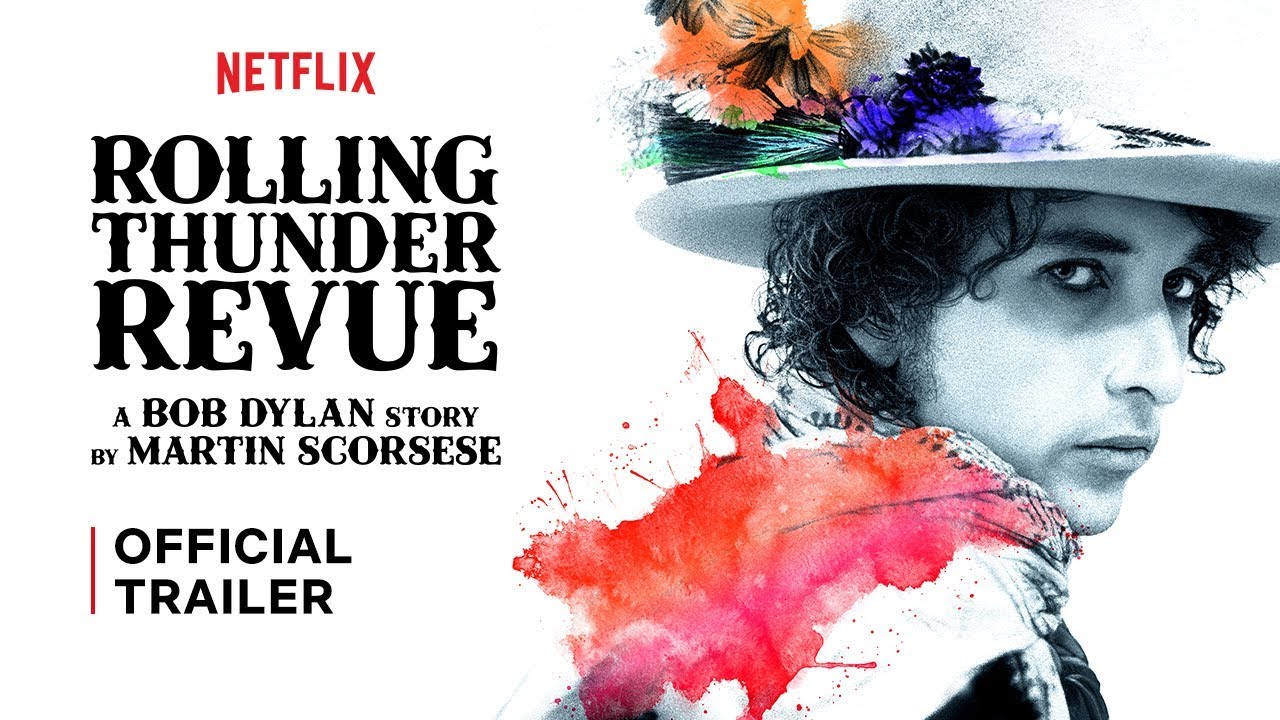
LIKE A ROLLING THUNDER


I think there's a case to be made that Bob Dylan created the "toxic fan".  I say this after having seen an interview with Martin Scorsese regarding his new Rolling Thunder Revue "documentary" on Netflix.  In the interview, he's discussing his reasons for making this film and he comments that Dylan always seemed to be pissing people off and something about that caught my attention, especially after watching the film.  

Who could forget his pivotal transition from acoustic troubadour to electric rocker?  His so-called "fans" were absolutely livid!  We're getting used to this sort of revolt now, what with the likes of Star Wars fans bemoaning any attempt to move their precious franchise into new territory, but back then, it wasn't so common for fans to react so harshly against an object of their affections.  Sure, the Beatles had spurned some by making an unfortunate comparison of themselves to Jesus, but with Dylan, it was purely a revolt triggered by the artist's decision to evolve into something new.  

Dylan's willingness to let people be confused and even irritated with him is a big part of what makes this film so compelling.  It's also something of a horse of a different color in the sense that it doesn't fit neatly into either slot of "fiction" or "documentary".  Here, both musician and film maker collude to blur the lines between truth and fallacy and create something thoroughly dishonest, yet paradoxically sincere in a single turn.  It's the kind of thing that would leave a Star Trek android grasping for logical validation as its circuits shorted out while struggling to sort through fact and fabrication.  Watching the film, one gets the sense that one is dealing with some big truths while we're being buried in deceptions.

What we're presented with here is a willful act of misdirection.  I went into it knowing that it was partly fictionalized, though the big question for me was why they would want to do this.  What would be the point of mythologizing this story and introducing deliberate fallacies into the product?  I think a big clue to the answer comes from the opening sequence showing old film of the great Georges Méliès performing one of his early film "special FX" magic tricks.   Scorsese sets his intentions on the table up front.  He's going to use the medium of film to play some tricks on us, but within that process, he's going to reveal something deeper and more meaningful.

Let me backtrack a bit here and state that I'm not an actual "fan" of Bob Dylan in any significant regard.  I don't have any of his recordings in my personal music library, but I do have a passing respect for his legacy and have at least some familiarity with his more famous songs, mostly thanks to other artists' renditions of them.  As such, the thought of watching this movie was a bit daunting, especially given its over 2 hour run time.  But my respect for Scorsese piqued my curiosity and I finally made the effort to give it a go.  I have no regrets about that now as I was engrossed by it from beginning to end.

Why it had this ability to hold my attention is something that I'm continuing to grapple with as I try to pull this apart and understand its appeal.  This project could easily have settled on mere nostalgia and reminiscing on times gone by, but it manages to do more than that by showing us the creative process in action in a way that is stripped of preconceptions and pretenses.  Whether you're a fan of Dylan or not, you can't look at these performances and the processes leading to them without marveling at the creative spirit driving it all.  Ultimately, this film is a celebration of that unbridled creativity, even in the license taken with the truth in its creation.  

I think that, perhaps, the introduction of fictional elements into this story is part of the magic which makes it more than just a document of the past and gives it a life in the present.  That unhinging is a means of making it live in the now.  Watching it, you don't feel like it's just old history, but something alive and responsive.  Even in the transitions from contemporary interviews to the archival film of the performances, there's a dynamic tension that wrestles with the viewer and pushes you to engage in a more active way.  You can't simply accept anything at face value and that demands you question everything you're watching.

You kinda need to go into this with one foot in the world of fact and one in the world of fiction, looking at it as a story, but also a history come to life.  As a fiction, it needs good characters to work and there are no shortage of them here, whether they were real or not.  Dylan himself is both ethereal and down to earth, depending on where you find him.  His present day interviews offer a character who is matter of fact and plain spoken, but his archival character seems more enigmatic and obtuse and then his on stage persona becomes something else altogether.

Visually, he was into wearing white face paint, crudely applied, for these performances.  At one point, he comments that someone wearing a mask is "always going to tell you the truth".  It's a line that stuck out for me as it touches on the heart of this film; the interplay between "fact" and "fiction".  The fiction of the mask enables the fact of the words to come through as the distortion of the ego is negated by the mask.  Then there's the hilarious confession that he got the idea for the makeup after seeing KISS perform in New York (he didn't).  Topped off with his flowered hat and hobo vest, the look is perfectly contrived, but also perfectly natural.  RuPaul says that "we're all born naked and everything after that is drag" and Dylan's "drag" on this tour works brilliantly to create the traveling carnival ring master.

It all works to manifest an iconic persona which makes you want to pay close attention to what he has to say.  Often, lyrics in music can lose much of their meaning and impact as the melody and rhythm of the song turns them into an abstraction, but here, I found myself paying particular attention to them and feeling myself drawn into their stories.  Dylan's timing, phrasing and cadence all conspire to hook your attention into what he's saying even if he might be caterwauling somewhat off key, though that never seems to matter.  The force of his convictions makes the sound of his voice seem like an incantation, conjuring up the events and people he's written about.  

Beyond Dylan, there are many other notable characters.   Scarlet Rivera is magical as the so-called "Queen of Swords".  She is quintessential in defining the musical idiosyncrasy which is core to the band and the sound they make.  Her violin lifts these performances into something more metaphysical that simple "folk" music.  And her presence on and off stage offers a perfect example of how Dylan put this band together and then let them all shine as individuals within that setting.  This ties back into the idea of thwarting expectations as this "revue" deftly avoids playing into what the audience may have wanted in terms of "the hits" and offers them the "now" instead.  

The other key figure here is Allen Ginsberg, who, in his "old man of the mountains" role, doesn't demand his disciples climb up to him, but rather brings his mountain on the road and offers it to the people.  It is Ginsberg who provides the philosophical foundation upon which this endeavor is built.  His exhortation at the end of the picture is profound and inspiring as he pleads with the viewer to go out and try to create something for themselves, to set their own "traveling circus" in motion.  Earlier in the film, Dylan says that life is not about "finding yourself" or anything, but rather "creating" yourself and creating things.  The entire film is an example of this process, a reflection of it and a product of it. 

With this exploration of creativity comes a sort of "lament" for something which seems to be in danger of extinction as humanity swirls around the drain, preparing for its final flush.  There's a melancholy about the transience of the creative process and how it can leave only "ashes" in its wake.  Scorsese seems to be desperately trying to rekindle the kind of creative spark this film celebrates as we get a glimpse of an American spirit which has largely vanished.  This film appears at a time when the country is in a state of crisis like it has never seen before.  It's an existential watershed moment where what humanity does in the next few years will have profound effects on whether or not we can even survive as a species. 

Yet, within that big picture, the kernel of truth is best found in the smallest of moments.  The finest example of this is the scene where Joni Mitchell is performing at Gordon Lightfoot's house along with the rest of the band.  It's a moment of pure intimacy and raw creativity as she does what she does best.  And I have to say I was struck by how much it reminded me of what Laurie Anderson does, though without the technological trappings.  But I could see a clear line of connection between the mannerisms and narrative techniques of the two which I'd never seen before.  Regardless, the moment is precious and personal and clearly illuminates the essence of what is being celebrated and cultivated. 

These moments are all wrapped up in this crazy story about a group of artists flying in the face of practicality to produce something that can reach into the human heart.  The fictional film makers, managers and hangers on woven into this tapestry serve a purpose in underscoring the mammoth impracticality of this whole concept while highlighting the magic that it creates.  The concept of the Rolling Thunder Revue was to set a group of creative souls on the road and have them go to places where regular people rarely get to see artists of this caliber in a setting where they were able to present a performance free from  expectations.  While the general critical consensus at the time was decidedly mixed and the economics of it were a disaster, the emotional impact of it is profound when you catch it.  This becomes crystal clear in one shot of a woman after a performance who, at first, appears to be stunned and then breaks down into tears as the impact of what has just happened sinks in.  It's a perfect portrait of the interplay between artist and audience when that connection reaches its full potential.

I'm still trying to understand why this film connected with me as much as it did.  I wasn't expecting it and wasn't prepared for it, which is why I've felt compelled to spew so much verbiage.  I suspect I'll be delving into aspects of this for some time, which is a wonderful thing for any creative product to inspire.  It's not just something you watch and then forget and I think that's a pretty significant achievement for everyone involved. 

2019-06-19

IF I COULD TURN BACK TIME


If I could go back in time and give my younger self some advice, I'd tell that young boy some things which would change the way he'd live his life.   You see, from the vantage point I have now, I know that the world he's going to live in is far different from the one he thinks is ahead.  Back there, he was thinking about a world based on romantic notions of progress, potential and possibilities.  But what is really around the corner has nothing at all to do with any of those things.

Firstly, I'd tell him that, above all else, money is the most important thing with which he'll ever need to concern himself.  Acquiring it, keeping it and increasing it is the holy trinity he should be focused on to the exclusion of all else.  Money is power and influence and security and control.  Money is a passport to any lifestyle one chooses to live.  Money can buy whatever you need in any circumstance.  Money paves the way and makes all things possible. 

This, of course, means that the very first thing he needs to put aside is any inclination towards the arts.  My God, what a colossal waste of time and effort is contained in that pursuit!  I would regale him with terrifying tales of years spent pouring physical and emotional fuel into creating piles of useless expression never appreciated by a single soul.  I would horrify him with the hopelessness of trying to communicate with a world completely indifferent to every effort.  I would crush his hopes by painting a pallid picture of tossing great pearls before a world of porcine ignorance and swine incapable of appreciation or comprehension.  No, no, no!  First and foremost, forget all about that.  

Instead, I would suggest real-estate as one profitable pursuit.  Property ownership in the right areas is paramount because when you control property, you control people.  But there's also much to be done in the speculation and investment markets.  In fact, a good con can move masses into unleashing great gobs of capitol into your disposal.  The main point to remember here is that one need not be concerned with legalities or ethics in any way.  The acquisition of wealth is its own end and any means to that end is justifiable.  The only consideration is that, if you're going to play outside the rules, be smart about it and don't get caught crossing the lines.  However, if you do find yourself afoul of the law, be assured that money has its privileges and that "greasing" the right palm can go a long way to avoiding issues.  

As for people and relationships, I would counsel to view them as resources and always consider them expendable.  Other humans are merely there for your convenience and should be used unflinchingly and thoroughly and, once exhausted of their value, discarded with as little consideration as one would give a piece of soiled tissue.  Anyone who would be unwise enough to attempt to thwart your objectives or interfere with your plans should be dispatched as quickly, efficiently and mercilessly as possible.  Again, one should endeavor to avoid legal complications, but be cognizant that there are always means by which individuals can be cleanly "eliminated", particularly when the price is right.  

Romance is a trap and should be avoided at all costs.  Romantic entanglements will only ever compromise your standards and dull your judgement.  Indulge your sexual proclivities as freely and frequently as you like, but maintain authority over anyone whom you would involve in such activities and be prepared to dispose of that relationship the instant you detect any attempt to influence your actions or interests.  All such efforts by others are a distraction.

The future is only that time in which you expect to live and anything beyond that span is of no concern.  Therefore, plan only to secure your own comforts for as long as you can reasonably foresee your survival and no more.  What state you leave the world when you die is irrelevant because you won't be around to experience it, so don't worry about it.  It's unlikely that you'll leave any heirs behind anyway, so you don't need to make provisions for them or any other descendants.  

These are the core values I would impart to my younger self in the hopes that he would avoid the wasted life I have lived.  These are the true values of the world he will have to live in.  These are the codes driving the most successful people he will encounter in his life.  Look around and find a single example of "success" in this world which does not rest atop these very principles.  Look no further than the current leader of the free world to find the most perfect expression of these truths in action.    Don't tell me that there's another way of living, a "righteous" way where people don't trample all over each other to secure their success.  I don't see that world anywhere and I don't see any evidence it will ever manifest.  

No, this is what I would tell that boy before he set off on his journey.  This is the roadmap I would place in his hands and this is the future for which I would make sure he was prepared.